
Emergency Restoration Contractor Review: What Matters
A flooded basement at 2 a.m. is not the moment to spend an hour comparing promises. Still, an emergency restoration contractor review can help you make a faster, safer decision when water, sewage, fire, or mould puts your property at risk. The right contractor should take control of the immediate hazard, explain what happens next, and stay accountable until the property is properly restored.
For homeowners, condo residents, landlords, and building operators across the Greater Toronto Area, the real question is not simply, “Who can arrive?” It is, “Who can prevent further damage and manage the recovery from start to finish?”
What an Emergency Restoration Contractor Review Should Reveal
A useful review goes beyond star ratings. It should give you evidence of how a restoration company performs during the difficult parts of a loss: after-hours response, water extraction, drying, insurance documentation, repairs, and communication when plans change.
Look for detailed comments rather than brief statements such as “great service.” A customer describing a burst pipe, a sewage backup, or a commercial flood can tell you far more. Did the team arrive promptly? Did they explain what could be saved and what needed to be removed? Did they keep the customer informed while equipment was running and repairs were underway?
The strongest reviews often mention ownership. Restoration work can involve plumbers, adjusters, drying technicians, cleaners, storage providers, tradespeople, tenants, and property managers. A contractor that coordinates these moving parts reduces the burden on the person already dealing with a damaged property.
Speed Matters, but the First Visit Must Have Purpose
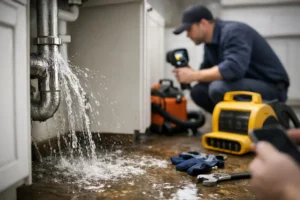
Rapid attendance is essential after a flood or plumbing failure. Water can move below flooring, behind drywall, into insulation, and through ceilings before the full extent of the damage is visible. In many cases, prompt extraction and professional drying help limit swelling, odours, mould growth, and avoidable reconstruction.
However, speed alone is not a complete measure of quality. Ask what the emergency team will do when it arrives. A capable first response generally includes stopping or isolating the source where possible, assessing affected areas, documenting damage, extracting standing water, setting up drying equipment, and identifying immediate health or safety concerns.
For example, a clean-water supply line leak may require extraction, moisture detection, drying, and selective removal of damaged materials. A sewage backup requires a more controlled approach because contaminated water can affect flooring, drywall, contents, and indoor air quality. Fire damage may involve water from firefighting efforts, smoke residue, odour control, and securing the property. The contractor should adapt the plan to the event, not apply the same response to every call.
If you are calling during an active emergency, give the contractor clear information: where the damage started, whether water is still flowing, what rooms are affected, whether electricity is involved, and whether the water may be contaminated. Then focus on getting help dispatched. You can complete a deeper comparison once the property is stable.
Questions to Ask Before You Authorize the Work
You do not need restoration expertise to ask practical questions. A professional contractor should answer directly, without pressure or vague assurances.
Ask whether the company provides 24/7 emergency response and whether its own trained team will attend. Confirm how the damage will be documented for your insurer, what drying process will be used, and how progress will be measured. Moisture readings and ongoing monitoring are especially important because a surface can look dry while building materials remain wet underneath.
You should also ask who will manage the repair phase after mitigation. Some companies only perform emergency cleanup, leaving you to find trades for drywall, flooring, painting, cabinetry, or other reconstruction. That arrangement can work for a small, contained loss, but it can create delays and accountability gaps on a larger project.
For many property owners, one team that handles assessment, mitigation, drying, cleaning, repairs, contents coordination, and insurance communication is easier to manage. It also creates a clearer line of responsibility from the first emergency call through to the finished result.
Reading Reviews for Insurance and Communication Clues
Insurance support is not a replacement for understanding your policy, deductible, or coverage limits. But a contractor experienced with insurance-related restoration can make the claims process less confusing by documenting the loss clearly, preparing estimates, and communicating with the appropriate parties.
In reviews, look for comments about transparent updates and organized paperwork. Customers should know what work is being performed, why materials are being removed, what drying equipment is doing, and what comes next. This is particularly important for condominium owners, where responsibility may involve the unit owner, condominium corporation, property manager, and insurer.
Commercial property managers need the same clarity at a larger scale. A water loss can disrupt tenants, inventory, operations, and building access. Reviews that mention scheduling around business hours, protecting unaffected areas, maintaining clean work zones, and providing regular progress updates are meaningful signs of a contractor that understands business continuity.
Be cautious of reviews that praise a low initial price but say little about the final scope, workmanship, or follow-up. Restoration is not an ordinary cleaning job. Cutting corners on drying, contamination control, or repairs can create a more expensive problem later.
Signs of a Thorough Restoration Process
A well-managed restoration project follows a clear sequence, even though the details vary by loss. First comes emergency response and stabilization. Next comes a documented assessment, followed by water removal, drying, cleaning, and disinfection where required. Once conditions are safe and dry, the repair and restoration work can begin.
That final phase matters. Removing wet materials may stop the immediate damage, but it does not restore a home, rental unit, office, or retail space to its pre-loss condition. A complete contractor review should help you identify companies that can finish the job with proper repairs and attention to the details people see and use every day.
At Restoration Canada, the focus is on managing that full recovery process, from urgent attendance and moisture control to detailed repairs and direct insurance billing where applicable. Clients should not be left wondering who is responsible after the fans and dehumidifiers are removed.
When a Lower Quote Is Not the Better Choice
Restoration estimates can differ because the scopes are different. One contractor may include moisture inspection, controlled demolition, antimicrobial treatment, equipment monitoring, contents handling, and reconstruction planning, while another may quote only the most visible cleanup. Comparing totals without comparing the work included can be misleading.
Ask for a clear explanation of the proposed scope and any conditions that could affect cost. Hidden damage is possible, particularly beneath flooring, inside walls, or above ceilings. A responsible contractor will explain that uncertainty rather than promise a fixed outcome before the property has been properly assessed.
The best choice is not always the fastest responder, the lowest quote, or the company with the most reviews. It is the contractor that can demonstrate responsive service, appropriate technical care, clear communication, and a realistic path to a fully restored property.
Make the Call Before Secondary Damage Sets In
If water is spreading, sewage has entered the property, smoke damage is present, or you suspect unsafe materials, do not wait for online research to be perfect. Take reasonable safety steps, protect people and pets, and contact an emergency restoration professional immediately.
A calm, capable response in the first hours can protect far more than walls and flooring. It can help protect your health, your claim, your tenants or customers, and your ability to get back on your feet with confidence.