
Landlord Water Damage Responsibilities in Ontario
A tenant calls at 2 a.m. because water is pouring through the kitchen ceiling. The immediate question is not who caused it or whose insurance will pay. First, the water must be stopped, the property made safe, and the damage documented. That practical reality sits at the centre of landlord water damage responsibilities in Ontario.
Water can move quickly behind walls, beneath flooring, and into neighbouring suites. A delay of even a few hours can turn a manageable plumbing leak into damaged drywall, warped flooring, electrical concerns, mould growth, and a much larger insurance claim. Landlords and property managers need a clear plan that protects tenants, preserves the building, and creates a reliable record of what happened.
What landlords are generally responsible for
In Ontario, landlords are generally responsible for keeping rental properties in a good state of repair and fit for habitation. This includes maintaining the plumbing, roof, building envelope, heating systems, and other features that can lead to water intrusion when they fail. If a pipe bursts, a roof leaks, an appliance supplied with the unit malfunctions, or a building drain backs up, the landlord typically must arrange the necessary repair and restoration work.
Responsibility is not always the same as fault. A landlord may need to respond and make the unit safe immediately even if the cause is still under investigation. For example, a leak originating in an upper apartment may damage a lower tenant’s ceiling. The owner or property manager should coordinate emergency mitigation before determining whether another tenant, a contractor, a condominium corporation, or an insurer may ultimately bear some of the cost.
The duty is also broader than fixing the visible source. Removing standing water, drying structural materials, cleaning affected surfaces, addressing damaged finishes, and checking for hidden moisture are often necessary to return the space to a safe condition. Simply patching a ceiling while insulation and framing remain wet can leave the property exposed to mould and repeat damage.
When a tenant may be responsible
Tenants must keep their rental unit reasonably clean and report maintenance problems promptly. They can be financially responsible if their negligent or deliberate actions cause damage. Common examples include an overflowing bathtub left unattended, damage from an improperly installed portable washing machine, or a frozen pipe caused by a tenant leaving windows open and heat off during winter.
Even in these situations, landlords should not wait to act. The priority is preventing further loss and protecting everyone in the building. Document the condition, retain photos and invoices, and communicate with the tenant in writing. Questions of recovery, liability, deposits, or insurance can be addressed after the emergency work is underway.
It depends on the details. A tenant may report a slow leak late because they did not recognize its seriousness, while a landlord may have been aware of an ongoing plumbing issue. In a dispute, facts matter: when the problem was discovered, when it was reported, what maintenance records show, and whether either party failed to take reasonable action.
The first hours after water damage
A fast, organized response limits disruption for tenants and reduces restoration costs. Landlords should give tenants a clear after-hours reporting process and treat active water events as emergencies.
1. Stop the source and protect people
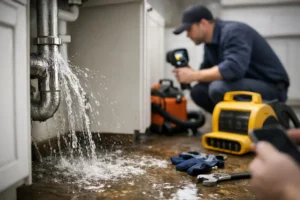
Shut off the local water supply when it is safe to do so. If water is near electrical outlets, fixtures, or equipment, avoid entering the affected area until electrical risks have been assessed. For sewage backups, contaminated water, or extensive flooding, keep tenants away from the area and arrange professional cleanup.
2. Attend, inspect, and document
Take photos and video before major cleanup begins where possible. Record the date, time, affected rooms, likely source, tenant reports, and visible damage to contents and building materials. This documentation supports insurance reporting and helps establish a clear timeline if responsibility is disputed.
3. Remove water and dry the structure properly
Mops and fans are rarely enough after significant water intrusion. Professional extraction, moisture readings, commercial drying equipment, and controlled monitoring help confirm that flooring, drywall, subfloors, and wall cavities are drying as they should. Materials that cannot be safely dried may need removal.
4. Keep tenants informed and restore the unit
Tell tenants what is happening, what areas they should avoid, and whether they need temporary access arrangements or alternate accommodation. Once drying and cleaning are complete, arrange repairs to walls, flooring, cabinetry, ceilings, and other finishes so the rental unit can return to proper condition.
Emergency repairs versus permanent repairs
Landlords do not need to solve every issue in one night, but they do need to take reasonable steps without delay. Emergency mitigation might involve stopping a leak, extracting water, setting drying equipment, and securing a damaged roof or window. Permanent restoration can follow once the area is dry, the cause is confirmed, and insurance requirements are understood.
This distinction matters because premature repairs can hide moisture or interfere with a claim. Replacing drywall before moisture levels are acceptable, for example, risks trapping dampness in the wall assembly. A complete restoration plan should address both the failed component and the damage it caused.
If the unit is not reasonably safe or habitable during repairs, landlords should seek appropriate advice on their obligations. The correct next step can depend on the severity of the loss, the terms of the tenancy, available alternate space, and applicable Ontario rules. Clear communication and written records are essential throughout.
Insurance, tenant belongings, and documentation
A landlord’s property insurance generally addresses damage to the building and landlord-owned fixtures, subject to the policy, deductible, exclusions, and cause of loss. It does not automatically cover a tenant’s furniture, clothing, electronics, or other personal possessions. Tenants are strongly encouraged to maintain tenant insurance for their belongings and personal liability.
Landlords should notify their insurer promptly, but they should not postpone emergency mitigation while waiting for an adjuster. Insurers expect reasonable steps to prevent further damage. Keep all invoices, moisture reports, photos, repair estimates, equipment logs, and correspondence. These records show that the loss was managed responsibly and can make the claim process less difficult.
For larger losses, a restoration team can help organize the documentation, separate emergency work from reconstruction, and communicate the condition of the property as drying progresses. Direct insurance billing may also be available depending on the claim and insurer.
Water damage in condominiums and multi-unit buildings
Condominium rentals add another layer of responsibility. A leak may begin within a unit, in a common pipe, on the roof, or in another suite. The condominium corporation’s declaration, bylaws, and insurance policy can affect who manages repairs to common elements, standard unit components, and improvements.
A landlord should report the incident to building management immediately while still taking urgent steps inside the rental unit. Waiting for responsibility to be assigned can allow damage to spread to adjacent homes. Coordinate access, document all affected areas, and ensure tenants know who to contact if conditions change overnight.
Property managers also need to consider the wider building impact. Moisture can travel vertically through risers and floor assemblies, while a drain backup can affect multiple units at once. Early inspection of neighbouring spaces is often the difference between a contained event and a costly multi-suite restoration.
Mould prevention is part of the job
Mould can begin to grow in damp materials within 24 to 48 hours under the right conditions. That is why drying is not an optional finishing step. It is a key part of meeting a landlord’s maintenance responsibilities after a leak or flood.
Musty odours, bubbling paint, stained ceilings, soft drywall, lifted flooring, and recurring condensation deserve attention. Do not assume that a surface looks dry simply because standing water is gone. Hidden moisture should be assessed with appropriate tools, and contaminated materials should be handled carefully, particularly after sewage or long-standing leaks.
Restoration Canada helps GTA landlords, property managers, and tenants take control after water damage with emergency response, water extraction, drying, documentation, repairs, and insurance coordination. When a property is actively leaking or flooded, acting quickly protects both the building and the people who call it home.
The most useful preparation is simple: make sure tenants know how to report an emergency, keep plumbing and building systems maintained, and respond decisively when water appears. A prompt, thorough recovery gives everyone a better chance to move forward with the property safe, dry, and properly restored.