
Burst Pipe Recovery in the First Critical Hour
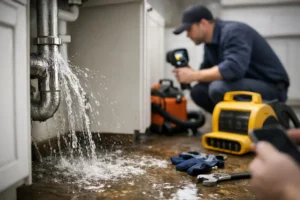
A burst pipe can release a surprising amount of water before anyone realizes what has happened. Water can travel beneath flooring, behind walls, through ceilings, and into neighbouring units or business spaces. Effective burst pipe recovery starts with fast action: stop the source, protect people and property, and begin professional drying before hidden moisture creates a larger problem.
For homeowners, condo residents, landlords, and commercial property managers across the GTA, the first hour can shape the entire recovery. The immediate goal is not to make the space look dry. It is to limit water migration, preserve evidence for an insurance claim, and prevent damage that may not appear until days later.
What to Do When a Pipe Bursts
First, shut off the water supply if it is safe to do so. If the leak is isolated to a fixture, use the local shutoff valve. If water is coming from a wall, ceiling, or an unknown location, close the main water valve for the property. In a condominium, notify building management or concierge immediately, especially if water may be affecting another suite or common area.
Next, think about electrical safety. Do not enter areas where water is near outlets, electrical panels, appliances, or exposed wiring. Avoid using switches in a wet area. If there is any concern that water has reached electrical components, keep clear and have the area assessed by qualified professionals.
Move valuables, documents, electronics, furniture, and inventory out of the wet area when it can be done safely. Place aluminum foil, plastic blocks, or other barriers beneath furniture legs to reduce staining and water absorption. Avoid dragging soaked furniture across floors, since this can spread moisture and damage finishes.
Take photos and short videos before extensive cleanup begins. Capture the source of the leak, affected rooms, standing water, damaged contents, ceilings, walls, and flooring. This documentation can help support an insurance claim and gives the restoration team a clearer picture of how the loss developed.
A plumber must repair or isolate the failed pipe, but plumbing repair alone is not full restoration. The surrounding materials may already hold significant moisture. Calling a water damage restoration team quickly allows mitigation work to begin while the property is still recoverable.
Why Fast Drying Matters After a Burst Pipe
Standing water is only one part of the damage. Drywall, insulation, wood framing, subfloors, carpets, underpad, cabinetry, and ceiling cavities can absorb water long after the visible puddle is gone. A floor may feel dry underfoot while moisture remains trapped below it.
That is why household fans and a shop vacuum are rarely enough for a major pipe break. They may improve surface conditions, but they do not confirm that wall cavities or structural materials have reached a safe drying standard. If water is not properly extracted and controlled, secondary damage may include swelling wood, delaminated flooring, deteriorated drywall, odours, corrosion, and mould growth.
The urgency depends on several factors. A clean-water leak from a supply line is often less contaminated than a sewage backup, but it can still cause severe structural damage. Hot water lines can create heavy humidity throughout an enclosed space. A slow leak discovered late may have already affected building materials for days. Water that has travelled through ceilings, insulation, or multiple floors requires especially careful assessment.
The Burst Pipe Recovery Process
Professional recovery follows a sequence because each stage protects the next. Skipping steps can lead to repairs being completed over damp materials, which creates avoidable problems later.
1. Emergency assessment and containment
The restoration team identifies the water source, confirms that it has been stopped or isolated, and assesses how far water has travelled. Moisture meters, thermal imaging, and visual inspection help locate affected areas that cannot be judged by sight alone.
Containment may be needed to protect unaffected rooms, tenants, inventory, or sensitive business operations. In a commercial setting, the team may also help establish safe access routes and prioritize areas that affect business continuity.
2. Water extraction and removal of unsalvageable materials
Commercial-grade extraction removes water from floors, carpets, and other affected surfaces far more effectively than basic cleaning equipment. The team then determines which materials can be dried and restored and which require removal.
Not every wet material needs to be discarded. Solid wood framing, certain tile floors, and some contents may be salvageable with prompt action. Saturated insulation, damaged particleboard cabinetry, swollen laminate, contaminated carpet, or compromised drywall may need to be removed to allow proper drying and prevent future deterioration. The right decision depends on the material, water category, duration of exposure, and extent of damage.
3. Structural drying and monitoring
After extraction, professional air movers, dehumidifiers, and other drying equipment are positioned to address the actual moisture conditions in the property. Equipment is not simply placed in a room and left running. Technicians monitor moisture levels and adjust the drying plan as materials dry.
This stage can take several days, depending on the size of the loss, the building materials involved, and whether water entered concealed spaces. Drying is complete only when affected materials meet acceptable moisture targets, not when they merely feel dry.
4. Cleaning, repairs, and restoration
Once the area is dry, damaged surfaces can be cleaned, disinfected where required, and prepared for repair. Restoration may involve drywall replacement, insulation, flooring, baseboards, painting, cabinetry work, ceiling repair, and rebuilding other finishes affected by the leak.
A complete service reduces the stress of coordinating separate trades while living or operating in a disrupted space. Restoration Canada can manage the process from emergency mitigation through detailed repairs, helping clients move from a water emergency back to a safe, functional, finished property.
Insurance Documentation Without Added Stress
A burst pipe claim is easier to manage when the loss is documented early and clearly. Keep records of photos, videos, emergency calls, plumbing invoices, damaged items, and any communication with your insurer or property manager. Do not throw away damaged contents until they have been documented and you have received direction from the insurer or restoration professional.
Many policies cover sudden and accidental pipe failures, but coverage can vary. The cause of the break, maintenance history, location of the pipe, resulting damage, deductible, and policy wording all matter. Frozen-pipe claims can involve additional questions about heating, occupancy, and reasonable precautions taken during cold weather.
For condo owners and tenants, responsibility can be more complicated. The source of the leak may be within a unit, behind a common wall, or in a building system. Building management should be notified promptly so affected areas can be investigated and the appropriate parties can coordinate repairs. Direct insurance billing, where available and approved, can also reduce administrative pressure during an already stressful event.
Mistakes That Can Make the Damage Worse
The most common mistake is waiting to see whether the area dries on its own. Water can remain hidden behind finished surfaces, and the cost of delay often exceeds the cost of an early inspection. Another mistake is repainting, replacing flooring, or closing walls before moisture testing confirms that the structure is dry.
Avoid using a household vacuum on standing water, particularly near electrical hazards. Do not use high heat to dry enclosed areas, as uncontrolled heat can warp materials and create humidity elsewhere. If the water has passed through a ceiling, do not stand beneath a bulging section or attempt to puncture it without professional guidance. A water-loaded ceiling can collapse unexpectedly.
Property managers and business operators should also avoid moving forward without a clear record of affected suites, equipment, inventory, and operations. A coordinated response protects tenants and employees while giving insurers the documentation they need.
Preventing the Next Pipe Failure
Once recovery is complete, ask what caused the pipe to fail. Freezing temperatures, aging supply lines, corrosion, poor insulation, excessive water pressure, failed fittings, and unheated areas are common contributors. The repair should address the cause, not only the visible break.
Before winter, insulate vulnerable pipes, seal cold air leaks near plumbing, maintain consistent indoor heat, and know where the main water shutoff is located. If a property will be vacant, arrange regular checks and follow insurer requirements for heat and monitoring. For older homes, multi-unit buildings, and commercial properties, planned plumbing inspections can reveal risk before a small weakness becomes an emergency.
A burst pipe is disruptive, but it does not have to define the condition of your property for months to come. Acting quickly, documenting carefully, and bringing in qualified help early gives your home, building, or business the best chance of a clean and complete recovery.