
Who Pays for Condo Water Damage in Ontario?
A leak from the suite above can turn a normal evening into soaked ceilings, damaged flooring, and an urgent question: who pays for condo water damage? In Ontario, the answer is rarely as simple as “the neighbour upstairs.” Responsibility depends on where the water came from, what it damaged, the condominium corporation’s declaration and bylaws, and each party’s insurance coverage.
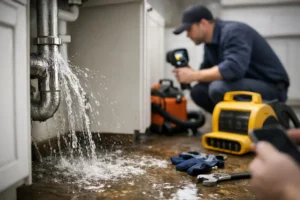
The immediate priority is not assigning blame. It is stopping the water, documenting the loss, and drying affected materials before moisture spreads behind walls or mould begins to develop. Once the emergency is controlled, the condo corporation, insurers, and owners can determine how costs should be divided.
Who Pays for Condo Water Damage? It Depends on the Source
Condominiums have shared building systems and privately owned suites, which makes water losses more complex than a typical house claim. A burst pipe may be part of the common elements, while the water may damage several privately owned units. A dishwasher leak may begin inside one suite but affect the ceiling, insulation, and finishes of another.
Generally, the party responsible for repairing a damaged item is determined by ownership and insurance obligations, not simply by where the water appeared. The condominium corporation is commonly responsible for common elements and certain standard-unit components. The unit owner is commonly responsible for personal belongings, upgrades, and damage to parts of their unit that fall outside the corporation’s insurance coverage.
Fault can matter, especially when negligence is involved. For example, an owner who ignores a known washing machine hose leak or leaves a bathtub running may face liability for damage caused to another suite. But an insurer may still manage the initial repair costs before pursuing reimbursement from the responsible party.
Start With the Condo Declaration and Standard Unit Bylaw
Every Ontario condominium should have a declaration, bylaws, rules, and insurance documents that explain maintenance and repair responsibilities. The key document in many water-loss situations is the standard unit bylaw. It defines what the corporation considers a “standard unit” for insurance purposes.
A standard unit often includes original finishes supplied when the building was constructed, such as basic flooring, cabinetry, drywall, plumbing fixtures, and countertops. However, definitions vary. One building may consider original hardwood or carpet part of the standard unit, while another may place responsibility for those finishes on the owner.
Anything an owner added or upgraded may not be covered by the condo corporation’s policy. If a unit owner replaced standard laminate flooring with engineered hardwood, installed custom cabinets, or renovated a bathroom, their personal condo insurance should typically cover the betterments and improvements. Keeping renovation invoices, photos, and a record of materials makes a major difference when a claim is assessed.
Property managers can usually provide the relevant documents quickly. Do not rely on assumptions or a neighbour’s interpretation. A small wording difference in the declaration can affect thousands of dollars in repairs.
When the Condo Corporation Usually Pays
The condo corporation normally carries insurance for the building’s common elements and standard units, subject to the policy deductible. This can include damage caused by a failed common plumbing line, a roof leak, a broken fire suppression pipe, or another building-wide system.
If water damages the original drywall and base finishes in several suites, the corporation’s insurance may cover restoration to the standard-unit condition. The corporation may also arrange emergency mitigation because it has a duty to protect the building and prevent further damage.
That does not always mean the corporation absorbs every cost. Many condominium insurance policies carry substantial deductibles, particularly for water damage. Ontario condo corporations may pass a deductible back to an owner when the damage originated in that owner’s unit or when the owner is responsible under the declaration, bylaws, or the Condominium Act. Whether that is permitted depends on the building’s governing documents and the circumstances of the loss.
For that reason, unit owners should carry condominium insurance with adequate deductible assessment coverage. This coverage can help if the corporation charges the owner a share of its deductible after an insured loss.
When a Unit Owner’s Insurance Usually Pays
A unit owner’s condo policy is designed to cover the parts of a loss that belong to the owner. This often includes personal contents, such as furniture, electronics, clothing, and appliances, along with upgrades to the suite and additional living expenses if the unit is temporarily uninhabitable.
It may also respond to damage caused by an owner’s own appliance, fixture, or plumbing connection. A failed refrigerator supply line, overflowing toilet, washing machine leak, or dishwasher malfunction can become the owner’s insurance claim, even when water reaches another suite.
Personal liability coverage is especially valuable if an owner is found legally responsible for damaging another person’s property. Still, liability is not automatic just because water came from one unit. Insurers investigate the cause, maintenance history, and whether the owner acted reasonably once the problem was discovered.
Tenants should not assume the landlord’s insurance protects their belongings. A tenant’s insurance policy is normally needed for personal contents and liability. Landlords, meanwhile, should confirm that their policy reflects any improvements they own inside the unit and the risks associated with renting it out.
What Happens When Water Comes From Another Unit?
Water often travels downward, but responsibility does not always travel with it. If your ceiling is wet because the suite above has a leaking shower, the owner upstairs is not automatically required to write you a cheque for every repair.
First, the source must be confirmed. The leak could stem from a private fixture, a shared pipe, or a defect hidden in the building structure. The condo corporation may need to open walls or ceilings to inspect the area safely. Both owners should report the incident to their insurers, and the property manager should be notified right away.
Your own insurer may cover eligible damage within your unit, then decide whether to seek recovery from another insurer later. This is one reason it is best to report the loss promptly rather than waiting for owners to negotiate responsibility on their own.
Four Actions to Take in the First Hours
Water damage becomes more costly as time passes. Drywall, insulation, flooring, and cabinetry can retain moisture long after visible water is gone. If the leak is active or the damage is significant, take these steps without delay:
- Stop the source if it is safe to do so. Shut off the local water supply or main valve if you can identify it. Do not touch electrical equipment in standing water.
- Notify the property manager or concierge immediately. They can contact building maintenance, access shutoff valves, notify affected owners, and start the corporation’s incident process.
- Document the damage. Take photos and video of the source, affected rooms, damaged belongings, and any visible staining. Keep receipts for emergency expenses and avoid discarding damaged items until your insurer advises you.
- Call a qualified water damage restoration team. Emergency extraction, moisture readings, structural drying, and disinfection help limit secondary damage. Fast action can save materials that would otherwise need replacement.
Do not paint over a water stain, run household fans for a day, and assume the problem is resolved. Moisture behind a ceiling or inside a wall cavity can continue causing damage long after the surface feels dry.
How Professional Restoration Supports the Claim
A proper restoration process creates a clear record of the loss while protecting the property. The work generally begins with emergency response and a detailed assessment. Technicians identify the source, map affected areas using moisture detection equipment, photograph conditions, and determine which materials can be dried or need removal.
Next comes water extraction and controlled drying. Commercial drying equipment is placed based on the materials and moisture levels involved, not guesswork. Affected areas are monitored until they reach appropriate drying targets. Where water is contaminated, such as from a sewage backup, additional containment and disinfection measures are required.
After the property is dry and safe, repairs can begin. This may include drywall, insulation, flooring, cabinetry, painting, and finish work needed to return the suite to its pre-loss condition. Restoration Canada can coordinate this process from emergency mitigation through complete repairs, while providing documentation that supports communication with property managers and insurers.
Review Your Coverage Before the Next Leak
The best time to understand a condo policy is before a pipe bursts. Ask your broker or insurer whether your policy includes sufficient coverage for unit improvements, personal contents, additional living expenses, personal liability, and deductible assessments. Review the deductible amount carefully, especially if your building has a high water damage deductible.
Owners should also know where their unit shutoff valves are located, replace aging appliance hoses, monitor toilets and under-sink connections, and report recurring moisture concerns early. Property managers can reduce building-wide risk by maintaining plumbing systems, responding to reports quickly, and making sure residents know who to contact after hours.
When water enters a condo, quick, well-documented action protects more than flooring and drywall. It protects your ability to make a clear claim, limit disruption, and get your home back to a safe, finished condition.