
Fire Damage Restoration: What Happens Next
The fire may be out, but the property is not yet safe or restored. Smoke can travel far beyond the room where the fire started, firefighting water can soak floors and walls, and soot can continue to damage finishes, electronics, and personal belongings. Professional fire damage restoration addresses the full loss, not just the visible burn damage, so you can protect the property and begin moving forward.
For homeowners, tenants, landlords, condo managers, and business operators in the Greater Toronto Area, the first hours after a fire are often overwhelming. The right response is to secure the site, document the damage, prevent further loss, and bring in an experienced restoration team that can manage cleanup, repairs, contents, and insurance communication.
What to Do After a Fire
Do not re-enter the property until fire officials say it is safe. Even a small kitchen or electrical fire can leave weakened materials, airborne particles, hidden moisture, and electrical hazards behind. If the building has been cleared for limited entry, avoid touching soot-covered surfaces or switching on damaged appliances and electronics.
Start by contacting your insurer and taking clear photos or video of affected rooms, contents, and exterior damage, if it is safe to do so. Keep receipts for emergency expenses and avoid throwing out damaged items before they have been documented. Some belongings that look beyond repair can be cleaned, deodorized, or restored by specialists.
Your immediate priorities are straightforward:
- Secure broken windows, doors, roof openings, or other points where weather and unauthorized entry could create additional damage.
- Arrange a professional assessment of fire, smoke, soot, and water damage.
- Remove standing water and begin controlled drying as soon as possible.
- Protect undamaged belongings from soot migration, moisture, and odours.
A restoration team can also help identify what needs urgent attention versus what can wait for the rebuilding phase. That distinction matters. Acting quickly prevents secondary damage, but rushed cleaning with the wrong products can permanently set soot stains or spread contamination.
Fire Damage Restoration Is More Than Cleaning Up Ash
A fire loss often involves several types of damage at once. Flames may have affected framing, drywall, flooring, cabinetry, insulation, and wiring. Smoke can enter closets, vents, neighbouring rooms, and upper floors. The water used to extinguish the fire may then create conditions for swelling materials, corrosion, and mould growth.
Soot is especially difficult because its behaviour depends on what burned and how the fire burned. Dry soot may be easier to remove with specialized vacuuming and dry-cleaning methods. Oily soot from synthetic materials can smear deeply into painted walls, fabrics, and porous surfaces. Acidic residues can begin corroding metal, tarnishing fixtures, and damaging electronics soon after the event.
Odour is another issue that should not be treated as an afterthought. Covering smoke odour with fragrance does not remove the particles causing it. Proper deodorization begins after source removal and detailed cleaning. Depending on the materials and severity of the loss, technicians may use controlled air treatment, thermal fogging, hydroxyl equipment, or other methods suited to the space.
The right approach depends on the fire, the building materials, the extent of water exposure, and how quickly mitigation begins. A contained stovetop fire in a condo may require focused cleaning, contents treatment, and odour removal. A larger house or commercial fire may require board-up, structural assessment, selective demolition, extensive drying, and staged reconstruction.
The Fire Restoration Process, Step by Step
1. Emergency protection and assessment
The first stage is about stopping the situation from getting worse. Technicians inspect the property, identify immediate health and safety concerns, and secure openings with board-up or tarping where needed. They assess the fire-affected area as well as adjacent spaces where smoke or water may have travelled.
A detailed assessment creates a practical scope of work. This can include moisture readings, documentation of affected contents, photographs for the insurance claim, and a plan for cleanup, repairs, and temporary storage. Clear documentation helps avoid confusion later, particularly where a condo corporation, landlord, tenant, or commercial insurer is involved.
2. Water removal and structural drying
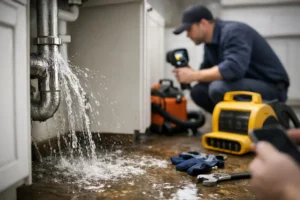
Water damage after a fire needs prompt attention. Wet drywall, insulation, carpet, wood flooring, and subfloors can deteriorate quickly if moisture is left in place. Restoration crews extract standing water, remove unsalvageable wet materials where necessary, and set up professional drying equipment to bring the structure back to an appropriate moisture level.
Drying is not simply a matter of placing fans in a room. It requires monitoring temperature, humidity, and moisture within materials. Thorough drying reduces the risk of mould and helps determine which structural components can be saved. If water has travelled through several levels of a property, the drying plan may need to address concealed cavities, ceilings, and flooring systems.
3. Soot, smoke, and contents cleaning
Once the site is stable, cleaning can begin. Technicians use material-specific methods for walls, ceilings, floors, furniture, clothing, appliances, and electronics. In many cases, contents are carefully packed out, inventoried, and moved to a secure location for specialized cleaning and storage while repairs take place.
This stage calls for care. Scrubbing soot-covered walls with household cleaners may push residue further into paint and drywall. Washing smoke-damaged fabrics without proper treatment can set odours. A professional team evaluates whether each item should be cleaned, restored, documented for replacement, or disposed of safely.
4. Repair and reconstruction
The final phase returns the property to a safe, functional, finished condition. It may include replacing insulation and drywall, repairing framing, repainting, installing flooring, rebuilding cabinetry, and restoring damaged electrical or plumbing components through qualified trades.
This is where an end-to-end restoration partner makes a meaningful difference. Rather than leaving you with a cleaned but unfinished property, the same team can coordinate the work from emergency mitigation through final repairs. Restoration Canada keeps clients informed throughout the process and can bill insurance directly where coverage and claim arrangements allow.
Insurance, Condos, and Commercial Properties
Insurance claims after a fire can involve multiple parties and deadlines. Your insurer will determine coverage, while restoration documentation supports the scope of the loss. Keep a record of all conversations, approvals, estimates, and expenses, and ask questions whenever the next step is unclear.
Condo losses can be more complex because responsibility may be divided between the unit owner, the condo corporation, and their respective insurers. Smoke or water may also affect neighbouring units and common areas. Early communication and a properly documented restoration plan help reduce disputes and delays.
For commercial properties, the priority extends beyond building repairs. Business interruption, tenant safety, equipment, inventory, records, and reopening timelines all need attention. A phased restoration plan may allow unaffected portions of a facility to remain operational while damaged areas are cleaned and rebuilt. It depends on the layout, fire severity, code requirements, and safety conditions.
Why Fast Action Matters After a Fire
Waiting can make a difficult loss more expensive. Soot residues can etch glass and metal, odours can settle deeper into porous materials, and firefighting water can lead to mould or structural deterioration. Fast mitigation protects what can still be saved and provides the documentation insurers need early in the claim.
Speed should not mean cutting corners. The goal is a controlled response: secure the property, remove hazards, dry the building, clean every affected area, restore salvageable contents, and rebuild to a high standard. If you need fire damage restoration, choose a team that can explain what is happening, what comes next, and who is accountable at every stage.
After a fire, progress often starts with one clear decision: get qualified help on site, ask for a complete assessment, and let the recovery plan replace uncertainty with practical next steps.