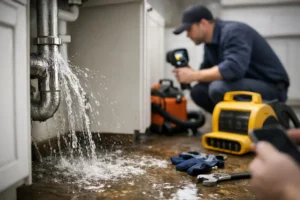

The True Cost of
Ignoring Water Damage
in Your Toronto Home
That small water stain on the ceiling. The damp patch near the basement wall. It feels manageable — maybe it dries on its own. That assumption becomes one of the most expensive mistakes Toronto homeowners make.
- Why It Costs More Than Expected
- What Happens When Untreated
- The Real Cost Breakdown
- Water Damage Gets Worse Over Time
- Mould After Flood Toronto
- Long-Term Effects
- Warning Signs
- When to Call a Professional
- FAQs
Most homeowners don't panic when they see a small water stain on the ceiling or a damp patch near the basement wall. It feels manageable. Maybe it dries. Maybe it disappears. Maybe it can wait until next weekend.
That assumption becomes expensive.
The cost of ignoring water damage Toronto homeowners face rarely comes from the original leak. The real expense starts afterward — when moisture spreads quietly inside drywall, insulation, flooring, and structural materials. What looked like a simple cleanup can turn into demolition, mould remediation, reconstruction, and insurance complications.
Why Water Damage Is More Expensive Than Most Homeowners Expect
Water behaves differently than people imagine. It doesn't stay where you see it. Water moves downward, sideways, and deep into porous materials. Drywall absorbs it. Wood stores it. Insulation traps it. Flooring can hold moisture long after surfaces appear completely dry.
The Hidden Nature of Moisture Damage
Think of water damage like rust inside a car. By the time the visible problem appears on the surface, the internal deterioration may already be advanced. The damage you see represents only a fraction of what is actually happening inside the structure.
Why Toronto Homes Face Higher Risk
Toronto homes are particularly vulnerable because of aging infrastructure, seasonal freeze-thaw cycles, heavy rain events, basement usage, and increasingly finished lower levels containing expensive flooring and cabinetry. Water damage has become one of the most common and costly homeowner issues across Canada — and the GTA's combination of older housing stock and increasingly intense weather makes it worse each year.
What Happens When Water Damage Is Left Untreated
The timeline of untreated water damage follows a predictable and increasingly costly pattern. Understanding what happens at each stage is one of the most important things a homeowner can know.
Standing water begins penetrating surfaces almost immediately. Wood expands. Drywall softens. Adhesives weaken. Mould can begin developing within 24–48 hours if moisture remains trapped. This stage is often still salvageable — extraction, drying, and moisture control can stop damage before major reconstruction becomes necessary.
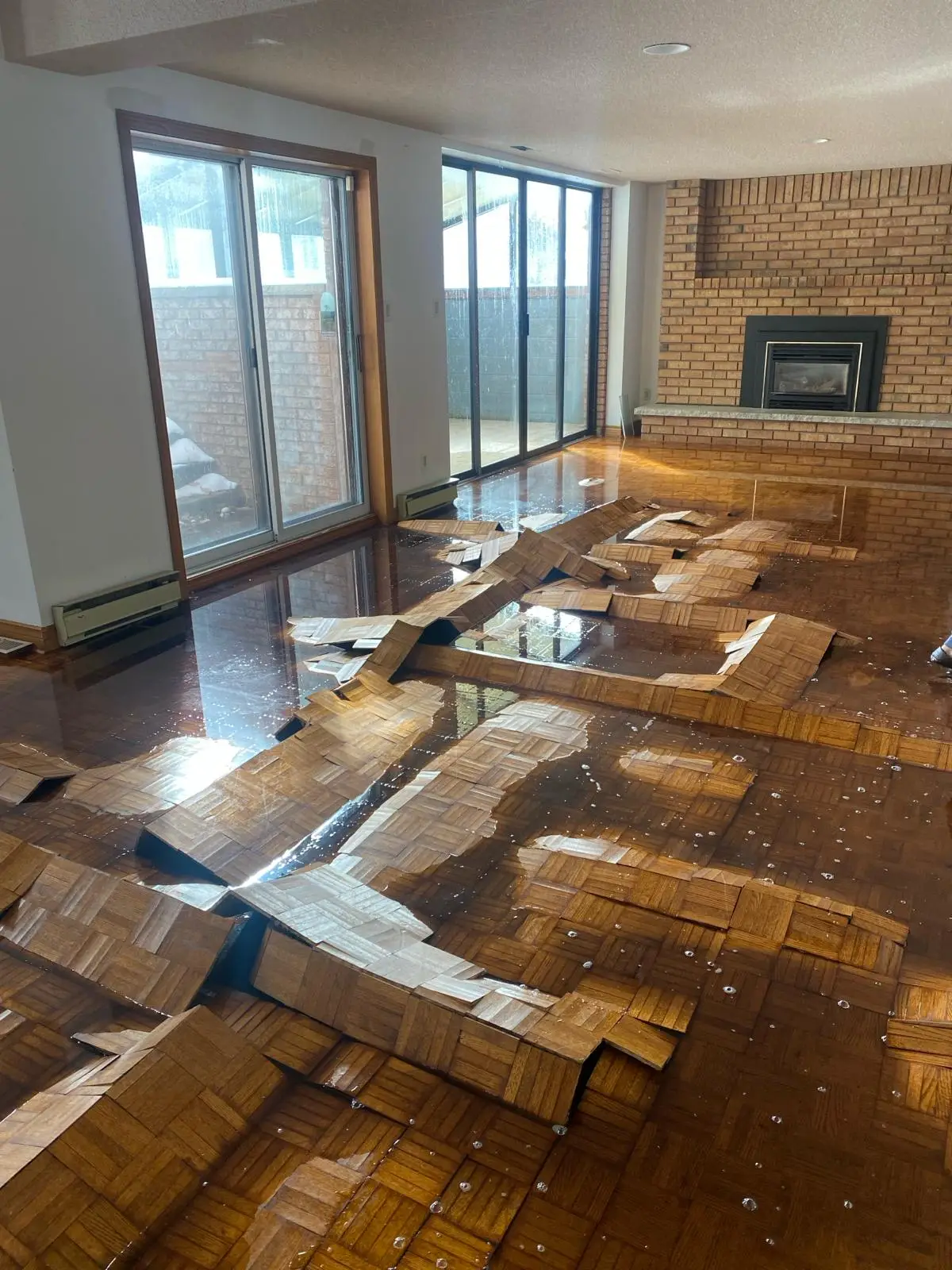
After several days, materials begin changing permanently. Paint bubbles. Flooring warps. Drywall loses structural integrity. Odours appear. The danger is that homeowners often confuse evaporation with drying — just because a surface feels dry does not mean hidden moisture has disappeared.
Weeks later, problems multiply rapidly — structural deterioration, rotting framing, electrical concerns, mould contamination, reduced air quality, and a dramatically larger restoration scope. What started as a manageable leak may now involve rebuilding entire sections of the home.
Understanding the Real Cost of Ignoring Water Damage Toronto
The biggest misconception is believing delayed action saves money. Usually, it does the opposite. Every day without professional intervention adds complexity, scope, and cost to what could have been a straightforward restoration project.
| Damage Stage | Typical Cost Range |
|---|---|
| Minor localized damage | $1,500 – $4,000 |
| Moderate multi-room restoration | $4,000 – $12,000 |
| Basement flooding & rebuild | $10,000 – $30,000+ |
| Catastrophic restoration | $25,000 – $80,000+ |
The first 24 hours after a basement flood are the most critical. We've seen $5,000 jobs become $50,000 jobs because a homeowner waited a weekend.
— Toronto Water Restoration ProfessionalWater Damage Gets Worse Over Time
Moisture Migration
Water damage compounds over time in ways that are not visible on the surface. Moisture migrates beneath flooring and inside wall cavities, spreading beyond the original affected area. Materials that could have been dried and preserved early eventually require complete removal and replacement after prolonged exposure.
Hidden Damage Behind Walls
Restoration professionals estimate structural drying alone can add thousands in cost when intervention is delayed. Water extraction, drywall replacement, dehumidification, and reconstruction rapidly increase project totals. This isn't only about appearance — it's about preserving the building envelope before deterioration spreads to components that are difficult and expensive to access and repair.
Don't Wait for Damage to Spread
Restoration Canada responds within 60 minutes across the GTA — 24/7, including weekends and holidays.
Mould After Flood Toronto: Why Timing Matters
Among all secondary problems caused by water damage, mould after flood Toronto concerns remain one of the most expensive and disruptive. Mould remediation often adds $1,500–$10,000+ to restoration projects depending on spread and containment requirements — costs that grow directly as a function of how long moisture was allowed to remain.
Conditions That Accelerate Mold Growth
The challenge is that mould doesn't need standing water. It needs moisture. Basements, insulation cavities, drywall backing, and low-airflow spaces create ideal environments even after water is no longer visible. Mould can establish and spread inside wall assemblies before a homeowner ever notices anything on the surface.
Health and Indoor Air Concerns
Many homeowners don't detect mould problems until they notice persistent musty smells, wall discoloration, peeling paint, increased indoor humidity, or air quality concerns. By that point, drying alone is no longer sufficient — professional remediation becomes necessary before repairs can begin.
Long-Term Water Damage Effects Most Homeowners Overlook
People usually focus on the immediate repair bills. But the bigger losses from ignored water damage often show up later — in ways that affect property value, insurance options, and long-term maintenance costs.
Reduced Property Value
Water history can significantly affect buyer confidence during resale. Repeated moisture issues, visible staining, and past remediation records may create negotiation pressure and reduce final sale prices. In some cases, disclosure requirements mean previous water damage must be communicated to potential buyers regardless of repairs completed.
Insurance Challenges
Insurance policies often distinguish between sudden accidental damage and deterioration caused by delay or neglect. Homeowners who act quickly generally preserve more coverage options. Those who wait may find claims disputed or partially denied based on the argument that reasonable mitigation steps were not taken promptly after the event was discovered.
Warning Signs You Should Never Ignore
Water damage rarely announces itself clearly. The signs are often subtle until damage is already well advanced. Call for professional inspection if you notice any of the following in your home:
- Bubbling or peeling paint
- Damp or musty smells
- Ceiling discoloration or staining
- Warped or buckled flooring
- Elevated basement humidity
- Soft or crumbling drywall
- Recurring water stains
- Visible mould spots
When to Call a Professional Restoration Team
Household fans and consumer dehumidifiers are not adequate for addressing water damage that has penetrated structural materials. Professional intervention becomes important — and cost-effective — when any of the following conditions apply:
- Water has affected more than one room or spread across a large area
- Moisture has entered walls, subfloors, or ceiling assemblies
- Flooding of any kind has occurred — stormwater, sewer backup, or pipe failure
- Drying has not been achieved within 24 hours using available means
- Any mould or unusual odour is present
- Structural materials feel soft, spongy, or show visible deterioration
Certified restoration teams use moisture mapping technology, industrial extraction systems, commercial-grade drying equipment, and ongoing monitoring that consumer tools cannot replicate. The difference between professional and DIY drying is often the difference between saving materials and replacing them entirely.
Final Thoughts
Ignoring water damage feels cheaper only in the moment. In reality, delay transforms manageable cleanup into reconstruction, mould removal, replacement materials, and lost property value. The cost of ignoring water damage Toronto homeowners experience is rarely caused by water itself — it is caused by time.
The faster the response, the more options remain available. The more options available, the lower the final cost. Early professional assessment is almost always the most financially sound decision a homeowner can make after any water intrusion event.
Don't Let Water Damage Escalate
Need immediate help with water damage? Don't wait for damage to spread. Call now to schedule an emergency assessment and protect your home before costs escalate.
Frequently Asked Questions
Yes. Moisture spreads into surrounding materials and increases restoration complexity significantly if left untreated. What may cost $3,000 to address in the first 24 hours can exceed $20,000 after a week of unchecked moisture migration.
Under the right conditions — warm temperature, trapped moisture, and limited airflow — mould growth can begin within 24 to 48 hours after water exposure. Basements and enclosed wall cavities are particularly vulnerable environments.
Typical residential restoration ranges from approximately $1,500 for minor localized damage to over $10,000 for moderate multi-room situations. Severe flooding with mould and structural reconstruction can reach $30,000–$80,000 depending on the extent of delay and damage.
Yes. Structural concerns, visible staining, and moisture history may reduce buyer confidence and create negotiation pressure during resale. In some cases, disclosure requirements mean previous water damage must be communicated to buyers regardless of repairs completed afterward.
Yes. Even small visible signs of water damage should be investigated promptly. A surface stain is often the last visible indicator of moisture that has already traveled into surrounding materials. Professional assessment determines whether hidden damage is present before it becomes a larger and more expensive problem.