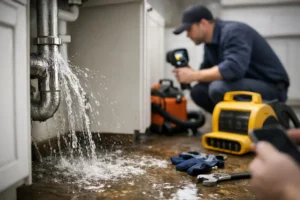

The Dos and Don'ts When Dealing With a Basement Flood Emergency
A basement flood emergency can happen in minutes — a sump pump failure, a burst pipe, or a sudden storm can leave you standing in inches of water before you even realize what’s happening. What you do in the first hour matters enormously, both for your safety and for how much the eventual repair costs. Here’s exactly what to do, and what to avoid.
The Dos
- Do prioritize safety first. Turn off electricity to the affected area at the breaker box before entering standing water — never assume it’s safe just because the water looks shallow. Water conducts electricity, and a submerged outlet or appliance can turn a flood into a life-threatening situation.
- Do identify the water source. If it’s a burst pipe or supply line, shut off your home’s main water valve immediately. If it’s groundwater or sewer backup, the priority shifts to extraction and containment rather than a shutoff.
- Do document everything before cleanup begins. Take photos and videos of the water level, damaged belongings, and affected walls and flooring. Insurance adjusters rely heavily on this evidence, and it’s much harder to reconstruct after the water is gone.
- Do start water removal as soon as possible. Every hour standing water sits increases the risk of mold growth, which can begin within 24 to 48 hours in the right conditions.
- Do call your insurance provider early. Even if you’re not sure the damage is covered, starting the claims process immediately avoids delays later.
The Don’ts
- Don’t use a regular household vacuum on standing water. Shop-vacs rated for wet use are fine for small amounts, but a flooded basement usually needs commercial-grade extraction equipment — regular vacuums risk electrical damage and injury.
- Don’t ignore a musty smell after the water is gone. Odor is often the first sign of hidden mold growing behind drywall or under flooring, even when everything looks dry on the surface.
- Don’t throw out damaged items before documenting them. It’s tempting to start clearing debris right away, but doing so before your insurance company has a record can complicate or reduce your claim.
- Don’t assume a small amount of water isn’t worth calling a professional. Even a few inches can saturate drywall and subflooring in ways that aren’t visible until mold or structural issues appear weeks later.
- Don’t wait to address the source of the flooding. Cleaning up without fixing what caused it — a failed sump pump, a cracked foundation, an aging backwater valve — means you’re likely to face the same emergency again.
Frequently Asked Questions
How quickly does mold start growing after a basement flood?
Mold can begin developing within 24 to 48 hours in a warm, humid basement environment, which is why fast water extraction and drying are critical.
Should I call a professional even for a minor basement flood?
Yes, if the flood involved more than a small, contained spill. Professionals have moisture meters that detect dampness inside walls and subflooring that isn’t visible to the naked eye.
Is basement flood damage usually covered by home insurance?
It depends on the cause. Sudden events like a burst pipe are typically covered under standard policies, while overland flooding often requires separate flood insurance. We can help you understand what your specific situation qualifies for.
Experiencing a Basement Flood Right Now? Don’t wait for the damage to spread. Restoration Canada responds 24/7 across Toronto and the GTA with emergency water extraction, structural drying, and direct insurance billing.