
Condo Leak Response Guide for the First Hour
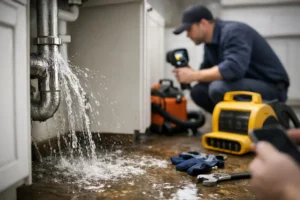
Water rarely stays where the first drip appears. A leaking dishwasher can travel beneath flooring, through wall cavities, and into the suite below before anyone sees the full problem. This condo leak response guide explains what to do in the first hour, who to notify, and why fast professional drying matters.
Put safety ahead of cleanup
If water is near outlets, light fixtures, appliances, or an electrical panel, do not step into the affected area or attempt to unplug anything. Keep people and pets away, especially if water is coming through a ceiling, which may be weakened by the weight above it. A ceiling that is sagging, bubbling, or actively bulging can fail without warning.
Do not assume the water is clean. Water from a supply line may begin clean, but water that has travelled through building materials, another suite, a drain line, or a sewage backup can carry contaminants. If the source is unknown, treat it cautiously and avoid using towels, fans, or household vacuums to handle a large loss.
If you smell burning, hear electrical crackling, or see water entering electrical fixtures, leave the immediate area and contact building management or emergency services as appropriate. Protecting people comes before protecting finishes.
Stop the source if it is safe
The next priority is to stop more water from entering the suite. For a contained plumbing issue, turn off the local fixture valve if you can safely identify it. If a toilet supply line, washing machine hose, or sink connection has failed, shutting off the valve near that fixture may limit the damage quickly.
When the leak cannot be isolated, use the suite’s main water shut-off if you know where it is and can access it safely. In many condominiums, this valve is located near the water heater, mechanical closet, laundry area, or under a kitchen sink. Do not spend valuable time searching if water is spreading rapidly. Call the concierge, superintendent, property manager, or the building’s emergency maintenance contact right away.
A leak may also originate outside your suite. Water staining on a ceiling, moisture around a fan, or water running down a wall can point to a leak from the unit above, a shared plumbing riser, a roof issue, or another common element. In those cases, the building needs to investigate and shut down the source.
Condo leak response guide: Notify the right people
Condo water losses involve more than one party, and early notice helps prevent delays. Notify your property manager, concierge, superintendent, or the emergency number set out in your building’s procedures. Tell them where the water is appearing, whether it is still active, and whether another suite may be affected.
If water could be coming from your appliance or plumbing, notify the owner of the suite below as soon as building staff advise you to do so. A quick, factual message can help your neighbour protect their belongings while the source is being addressed. Avoid assigning blame or agreeing to pay for damage before the cause has been investigated.
You should also contact your condominium insurer or broker promptly, particularly where personal property, improvements, or temporary accommodation may be involved. The corporation’s insurance may respond to certain common-element damage, while your own policy may cover your contents, upgrades, deductible exposure, or additional living expenses. Responsibility depends on the condominium declaration, bylaws, insurance policies, the source of the leak, and whether an owner-installed improvement was damaged. Let the insurer and property manager determine the coverage path.
Document what you can, without delaying mitigation
Take clear photos and short videos of the active leak, standing water, affected rooms, damaged contents, and visible staining. Capture wide shots to show the room, then closer images of flooring, walls, cabinetry, and belongings. If the leak came from an appliance or pipe, photograph the connection and any visible failure before it is repaired, if doing so is safe.
Write down the time you first noticed the issue, who you contacted, and what action was taken. Keep receipts for emergency purchases, such as a hotel stay, essential clothing, or temporary storage, if your suite becomes unsafe or unusable. This record can support the insurance claim and help the condo corporation coordinate work across affected units.
Documentation should never become a reason to wait. A few minutes of useful evidence is enough before the focus returns to stopping water and starting proper drying.
Remove what can be saved, then leave the drying to professionals
Move dry, portable items away from the wet area where possible. Lift furniture legs off damp flooring using clean blocks or plastic supports, and remove rugs that are still dry enough to relocate. Keep wet belongings separated from unaffected contents, as moisture can spread through contact.
Be careful with built-in finishes. Do not pull up engineered flooring, remove baseboards, cut into walls, or open a ceiling without direction from the property manager, insurer, or restoration team. In a condo, building components and neighbouring suites may be affected, and unplanned demolition can create further damage or complicate the claim.
Mopping visible water is useful only when the loss is small and fully contained. It does not dry the moisture trapped beneath flooring, behind cabinets, inside drywall, or in insulation. A professional water-damage assessment uses moisture detection equipment to identify where water has travelled. The team can then extract water, set controlled drying equipment, monitor moisture levels, clean and disinfect affected materials, and determine which components can be saved.
Time matters because mould can begin growing on wet materials within 24 to 48 hours under the right conditions. It is also easier to preserve flooring, cabinetry, and contents when drying begins before materials swell, delaminate, or break down.
Avoid common first-hour mistakes
A flooded condo suite can make people want to act quickly, but some well-meant actions increase the risk. Do not use a standard household vacuum on standing water, especially near electrical sources. Do not run your central HVAC system if water may have affected ducts, mechanical equipment, or contaminated materials. Do not place ordinary fans over water from a drain backup or unknown source, as this can spread contaminants.
Avoid painting over stains or closing up a wet area because it looks dry on the surface. Water can remain behind finishes long after the visible signs have faded. Similarly, do not throw out damaged materials or belongings until they have been documented and your insurer has provided direction, unless they pose an immediate health or safety risk.
If the leak has reached another suite, keep communication calm and practical. Building management should coordinate access, restoration scope, and updates. A clear record of what happened will be more useful than assumptions made during a stressful moment.
What a complete condo water-damage response looks like
Emergency mitigation is the first stage, not the finished job. A thorough response starts by identifying and controlling the source. Next comes a documented assessment of affected materials, moisture migration, and contamination risks. Water is extracted, damaged contents are protected or moved when needed, and professional drying begins.
Once materials have reached appropriate drying targets, the restoration scope can be confirmed. That may include replacing drywall, insulation, baseboards, flooring, cabinetry components, or ceiling finishes. Where a drain or sewage backup occurred, cleaning and disinfection must be completed before repairs begin. The goal is not simply to make the suite look normal again. It is to return it to a clean, dry, safe condition without leaving hidden moisture behind.
For property managers, coordinated restoration is especially valuable when multiple units are involved. One accountable team can communicate with occupants, document conditions for insurers, manage containment and drying, and plan repairs around building access and resident needs. That reduces confusion when a single pipe failure affects several homes.
Get help before secondary damage takes hold
When water is active, spreading, or coming from an unknown source, call for emergency restoration support immediately. Restoration Canada provides 24/7 assistance across the Greater Toronto Area, with rapid on-site response, detailed drying and cleanup, repair coordination, and direct insurance billing where applicable.
A condo leak is disruptive, but the first hour can change the outcome. Make the area safe, stop the water if you can, notify building management, document the loss, and bring in qualified help before hidden moisture has time to become a larger repair.