
Commercial Property Flood Restoration Steps
A flooded commercial space can disrupt far more than a single room. It can close a retail floor, damage tenant suites, interrupt manufacturing, compromise electrical systems, and put inventory, records, and people at risk. Commercial property flood restoration starts with fast, controlled action to stop the loss, protect the building, and get operations moving again.
The first hours matter. Water does not stay where it starts. It can travel under flooring, behind baseboards, through ceiling cavities, and into neighbouring units. A response that only removes visible water can leave moisture behind, creating conditions for mould growth, odours, material failure, and a longer business interruption.
What to Do Immediately After a Commercial Flood
First, make the area safe. If water is near electrical equipment, outlets, panels, or machinery, keep staff and tenants away until the area has been assessed. Do not enter standing water where electrical hazards may be present. If the source is a burst pipe or appliance supply line, shut off the water if it can be done safely.
Next, document what you can without delaying emergency mitigation. Take photos and video of affected rooms, equipment, stock, finishes, and the apparent water source. Keep a record of when the loss was discovered, which areas were affected, and any immediate steps taken. This information can support your insurance claim and help a restoration team develop the right scope of work.
Then call for professional help. For a commercial property, the priority is not simply pumping water out. The building needs a coordinated plan that considers safety, occupancy, contents, air quality, drying requirements, and the repairs needed to reopen properly.
Commercial Property Flood Restoration Is More Than Water Removal
Commercial property flood restoration is a complete recovery process, from emergency mitigation through to finished repairs. The correct approach depends on the water source, the building materials affected, how long water has been present, and whether the property remains occupied.
Clean water from a supply line may allow more materials to be saved if the response is immediate. Water from a sewer backup, toilet overflow, storm runoff, or a flood that has travelled through contaminated areas requires a more cautious approach. Porous materials such as drywall, insulation, carpet padding, and some ceiling tiles may need to be removed rather than dried and reused. In these situations, disinfection and contamination control are just as necessary as extraction.
A professional team begins by identifying the source and classifying the loss. Moisture readings, thermal imaging, and targeted inspections help determine where water has travelled. This prevents a common and costly problem: repairing visible finishes while hidden materials remain wet.
1. Emergency response and site stabilization
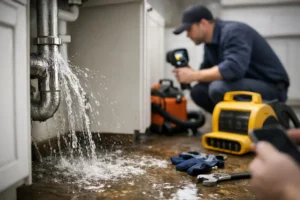
Rapid attendance limits the spread of damage. On arrival, the restoration team secures the affected area, identifies immediate hazards, and takes steps to prevent further loss. This may include stopping the water source, protecting unaffected areas, setting up containment, and moving vulnerable contents.
In multi-unit buildings, the team must also consider water migration between floors and suites. A leak in one office or condominium unit may affect ceilings, walls, electrical systems, and contents below. Clear communication with property management, tenants, and building operations is essential from the beginning.
2. Water extraction and contents protection
Standing water is removed using commercial extraction equipment. The goal is to remove as much water as possible before drying begins, because extraction is faster and more effective than relying on air movement alone.
Contents may need to be moved, inventoried, packed out, or placed in secure storage. This is especially relevant for businesses with merchandise, files, electronics, furniture, tools, or specialized equipment. Some items can be cleaned and restored. Others may need detailed documentation for insurance purposes. The right decision depends on contamination, material type, replacement value, and whether cleaning can return the item to a safe condition.
3. Structural drying and disinfection
After extraction, trained technicians install drying equipment based on the affected materials and measured moisture levels. Air movers, dehumidifiers, and specialized drying systems work together to remove moisture from the air and building components.
Drying is not a one-time setup. Conditions need to be monitored regularly, with moisture readings recorded to confirm that structural materials are returning to an acceptable dry standard. This evidence matters for both a successful restoration and insurance documentation.
Where water is contaminated, affected surfaces are cleaned and disinfected using appropriate procedures. Containment may be used to prevent cross-contamination while damaged material is removed. If mould is found or conditions indicate a mould risk, remediation should be handled before reconstruction begins.
4. Repair, reconstruction, and reopening
Once the space is dry and safe, repairs can begin. Depending on the loss, this can include replacing drywall, insulation, flooring, ceiling systems, cabinetry, trim, paint, and damaged fixtures. Larger losses may also require coordinated work around electrical, plumbing, HVAC, or fire protection systems.
For commercial operators, the repair schedule should account for business continuity. A retail unit may need phased work so part of the space can reopen. An office may require temporary relocation for staff. A property manager may need work scheduled around tenant access, building rules, or after-hours requirements. There is no single plan that fits every property, but a clear sequence and one accountable restoration team reduce confusion.
Protecting Tenants, Staff, and Business Operations
Flood recovery affects people as much as it affects materials. Tenants need accurate updates about access, safety, expected timelines, and the status of their belongings. Staff need clear direction on whether they can enter the building, use equipment, or resume normal work.
Property managers and building operators should designate one point of contact to work with the restoration team and insurer. This helps prevent conflicting instructions and keeps decisions moving. Regular updates should cover drying progress, areas that remain restricted, materials being removed, repair milestones, and any changes to the original scope.
Business interruption is often the biggest concern after a major flood. While not every closure can be avoided, early mitigation can reduce downtime. Fast extraction, proper drying, contents handling, and prompt authorization for repairs all help shorten the path back to normal use.
Insurance Documentation Without Added Stress
Insurance claims can feel overwhelming when you are also dealing with tenants, staff, customers, and a damaged building. Detailed documentation gives the claim a stronger foundation. It should show the source of loss, affected areas, moisture findings, emergency services performed, damaged materials, contents handling, and repair requirements.
Direct insurance billing can also reduce administrative pressure during an emergency. Restoration Canada works with property owners, managers, and insurers to document the loss clearly while keeping clients informed about the restoration plan. The goal is to avoid gaps between emergency cleanup and the repairs needed to return the property to pre-loss condition.
Coverage, deductibles, and approval requirements vary by policy, so it is wise to notify your insurer promptly. Do not wait for an adjuster before taking reasonable steps to prevent further damage. Emergency mitigation is usually necessary to protect the property, but keep records, photographs, and invoices for all work completed.
When Flood Damage Becomes a Larger Building Issue
Some floods reveal underlying problems that should be addressed during restoration. A recurring basement flood may point to drainage concerns, foundation cracks, failed sump equipment, or exterior grading issues. A burst pipe can expose aging plumbing or inadequate insulation. A roof leak may reveal compromised flashing, drainage, or roof membrane details.
Repairing the visible damage without addressing the cause can lead to another loss later. Once the immediate emergency is under control, ask what failed, what can be repaired, and what preventative work may reduce future risk. The answer may be straightforward, or it may require input from plumbing, roofing, waterproofing, or building-envelope professionals.
When your commercial property floods, quick action protects more than drywall and flooring. It protects the people who rely on the building every day. Call 24/7 for immediate help, secure the site, and let a qualified restoration team take control of the recovery while you focus on getting your operation back on its feet.