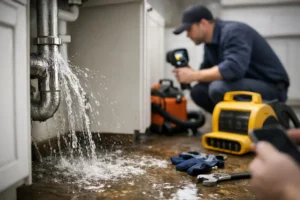

Apartment Flooding Guide for the First 24 Hours
A flooded apartment can go from a wet floor to damaged drywall, flooring, furniture, and neighbouring units in a matter of hours. This apartment flooding guide gives tenants, landlords, and property managers a clear first-response plan for protecting people, limiting damage, and starting a proper recovery.
Put Safety Before Cleanup
Do not step into standing water if there is any chance electrical outlets, appliances, extension cords, or your electrical panel have been affected. If it is safe to do so, turn off the water supply at the local shutoff valve. If you cannot safely reach it, contact building management, the superintendent, or an emergency restoration team immediately.
Water from a clean supply line is not always clean for long. Once it passes through building materials, flooring, or contaminated areas, it can carry bacteria and other contaminants. A sewage backup, toilet overflow, or floodwater entering from outdoors should be treated as contaminated from the start. Keep children, pets, and unprotected occupants away from the affected area.
If water is actively dripping from the ceiling, move away from the area and avoid touching light fixtures or switches. A sagging ceiling may hold a significant amount of water and can collapse without warning. Notify your building manager and arrange professional help rather than trying to puncture or drain it yourself.
The First Steps in an Apartment Flood
Fast action matters because mould can begin to grow when materials remain damp for 24 to 48 hours. The goal is not simply to remove visible water. It is to stop the source, protect your belongings, document the loss, and dry affected materials completely.
- Stop or contain the water source. Shut off a local valve if the leak is inside your unit and it is safe to access. For an overflowing fixture, stop using it. For a leak from another apartment, a shared plumbing stack, roof, or exterior wall, contact the property manager or emergency building contact right away.
- Call for urgent assistance. Report the incident to your landlord, condominium corporation, or property manager in writing as soon as possible. If water is spreading, a pipe has burst, sewage is involved, or ceilings and walls are saturated, call a 24/7 restoration professional for immediate mitigation.
- Document before moving items. Take photos and video of the water source, affected rooms, damaged belongings, wet walls, and flooring. Record the date, time, who you contacted, and what they advised. This documentation can support communication with building management and an insurance claim.
- Protect what can be saved. Move dry belongings away from the affected area, placing them in a safe location. Lift furniture onto blocks where practical and remove rugs, cushions, books, and electronics from wet surfaces. Do not drag heavy furniture over saturated flooring, as this can cause further damage.
- Begin drying only when it is safe. Open interior doors and use fans only if the water is clean and there is no electrical risk. Household fans and towels may help with a very small, contained spill, but they cannot dry water trapped below flooring, behind baseboards, or inside walls.
Who Is Responsible for an Apartment Flood?
Responsibility depends on the cause of the flood, your lease or condominium documents, and the extent of the damage. A tenant may be responsible for damage caused by their own actions, such as leaving a tap running or failing to report a leak promptly. A landlord or property owner may be responsible for maintaining plumbing, the building envelope, and essential systems.
In condominium buildings, responsibility can be more complex. The source may be within a unit, a common element such as a shared pipe or roof, or a combination of both. The condominium corporation, unit owner, tenant, and their insurers may all need to review the event.
Do not wait to determine fault before reporting the incident. Water damage gets worse while people debate responsibility. Prompt notice gives the building team an opportunity to shut down water, inspect adjacent units, and prevent a small leak from becoming a larger property loss.
What Not to Do After Water Damage
A quick cleanup can be tempting, especially when the water appears minor. However, several common actions can make an apartment flood more dangerous or more expensive to restore.
Do not use a regular household vacuum on standing water. Do not remove wet drywall, flooring, or ceiling materials without knowing whether electrical wiring, contamination, or asbestos-containing materials could be present. In older buildings, disturbing certain materials without proper assessment can create an additional health concern.
Avoid using bleach as a catch-all solution for mould or contaminated water. Bleach does not address moisture inside porous materials, and it is not a substitute for controlled removal, cleaning, and drying. Never mix cleaning products, particularly in poorly ventilated spaces.
It is also wise not to discard damaged belongings before they have been photographed and reviewed for insurance purposes, unless they pose an immediate health hazard. A restoration team can often assess whether contents can be cleaned, dried, stored, or need to be removed.
How Professional Apartment Flood Restoration Works
Proper restoration is a controlled process, not just a cleanup visit. The first priority is emergency mitigation: locating the moisture, extracting standing water, protecting unaffected areas, and setting up professional drying equipment. Moisture readings and thermal imaging can help identify wet materials that are not obvious from the surface.
Next comes cleaning and disinfection where required. Clean-water losses may need drying and selective material removal, while sewage backups and other contaminated losses require more extensive containment, removal, and sanitization. The right approach depends on the source of the water, how long it has been present, and which materials were affected.
Once the area is dry and safe, repairs can begin. This may include replacing insulation, drywall, baseboards, flooring, cabinetry, or ceiling finishes. A complete restoration plan should address both the visible damage and the hidden moisture that could otherwise lead to odours, mould growth, or future deterioration.
For Greater Toronto Area property owners and managers, Restoration Canada can coordinate emergency water removal, drying, cleaning, repairs, contents handling, and direct insurance billing. Having one accountable team helps reduce delays and keeps communication clear while the property is returned to its pre-loss condition.
Insurance and Records: Make the Process Easier
Contact your tenant, condo, or property insurance provider promptly after reporting the flood to building management. Ask what documentation they need and whether they require an adjuster to inspect before repairs begin. Emergency mitigation should not be delayed when water is actively damaging the property, but clear records help everyone understand what happened and why each step was necessary.
Keep copies of photos, videos, emails, incident reports, invoices, and an inventory of damaged belongings. Include approximate purchase dates and replacement values for contents where possible. If you are a landlord or property manager, record affected units, tenant communications, access arrangements, and actions taken to mitigate the loss.
Coverage varies. Tenant insurance may cover personal belongings and additional living expenses, while the building policy may address certain structural components. Deductibles, exclusions, and responsibility for improvements can differ, particularly in condominiums, so avoid making assumptions before reviewing your policy.
Preventing the Next Apartment Flood
Some floods cannot be predicted, but routine attention catches many problems early. Report slow drains, recurring toilet overflows, damp spots, discoloured ceilings, musty odours, and changes in water pressure before they become emergencies. Property managers should also maintain regular inspections of plumbing risers, roofs, mechanical rooms, sump systems, and vacant units.
If you are leaving an apartment or condo vacant for more than a few days, follow building procedures for shutoffs and check that appliances, hoses, and fixtures are secure. Never ignore a small leak because it seems manageable. The most expensive apartment floods often begin as a drip behind a wall or beneath a cabinet.
When water enters your apartment, fast reporting and professional drying protect more than the unit itself. They protect your health, your belongings, your neighbours, and your ability to get back to normal with fewer surprises.