
Fire Cleanup Checklist: Steps to Take First
A fire can be out in minutes, but the damage it leaves behind is rarely simple. Soot travels through rooms that appear untouched, firefighting water can soak floors and walls, and a property may have hidden electrical or structural hazards. This fire cleanup checklist helps GTA homeowners, condo residents, landlords, and business operators make safe decisions in the critical hours after a fire.
The first rule is straightforward: do not begin cleaning until the fire department has confirmed that it is safe to enter. A rushed attempt to salvage belongings can expose you to contaminated dust, unstable materials, sharp debris, or active electrical risks. The right first steps protect people, support your insurance claim, and help prevent avoidable secondary damage.
1. Confirm the Property Is Safe to Enter
Wait for authorization from the fire department or other emergency officials before going back inside. Even a small kitchen fire can compromise wiring, cabinets, appliances, drywall, or ceiling materials. Smoke can also linger in areas with poor ventilation, including basements, crawl spaces, storage rooms, and upper floors.
Once entry is permitted, keep your visit brief and avoid touching damaged surfaces. Wear closed-toe shoes, long sleeves, gloves, and a properly fitted respirator if you must enter an affected area. A basic dust mask is not enough protection where soot, ash, or other fine particles are present.
Do not turn on lights, appliances, HVAC equipment, or water fixtures if they may have been affected by heat, smoke, or firefighting water. If you smell gas, hear hissing, see exposed wiring, or notice sagging ceilings or walls, leave immediately and contact the appropriate emergency utility or restoration professional.
2. Protect People, Pets, and the Building
After everyone is safe, focus on preventing the situation from becoming worse. Fire damage is often followed by water damage from hoses or sprinkler systems, especially in commercial spaces and multi-unit buildings. Standing water, wet insulation, and saturated drywall can create conditions for mould growth if drying is delayed.
If the property cannot be secured, arrange for emergency board-up, roof tarping, or temporary fencing. Broken windows and damaged doors leave a building exposed to weather, theft, and further contamination. In a condo or apartment, notify property management right away. Damage may affect shared walls, ventilation systems, hallways, neighbouring units, or the building’s fire safety systems.
For commercial properties, identify whether any operations need to stop immediately. Restrict access to the affected area, protect employees and tenants, and move only essential records or equipment when it is safe to do so. Business interruption decisions are easier when the condition of the site is documented early.
3. Document the Damage Before Cleaning or Moving Items
Thorough documentation gives your insurer a clear picture of the loss and helps your restoration team plan the work. Take photos and video from several angles before discarding damaged items, wiping surfaces, or moving furniture. Capture affected rooms, ceilings, floors, contents, appliances, exterior damage, and any visible water intrusion.
Create a written list of damaged belongings, including approximate purchase dates, values, makes, models, and serial numbers where available. Keep fire department reports, receipts for emergency accommodation, meals, clothing, boarding for pets, temporary security, and other fire-related expenses. These records may be relevant to your claim.
Avoid throwing away damaged possessions until your insurer has reviewed them or told you otherwise. This includes food, electronics, furniture, clothing, and building materials. Some items may be restorable through specialized contents cleaning, while others may need to be documented before disposal.
4. Contact Your Insurance Provider Promptly
Call your insurer as soon as you can safely do so and open a claim. Ask for the claim number, the adjuster’s contact information, and clear direction on emergency work, contents handling, temporary accommodation, and repair authorization. Keep notes after every conversation, including dates, names, and agreed next steps.
Most policies expect property owners to take reasonable measures to prevent further damage. That does not mean you should attempt hazardous cleanup yourself. It means acting promptly to secure the property, address water intrusion, and begin professional mitigation where needed.
A restoration company can help document damage, communicate the scope of emergency work, and organize the next stages of recovery. Restoration Canada can also bill insurance directly on eligible claims, helping reduce administrative pressure while you focus on your family, tenants, employees, or business operations.
5. Do Not Attempt DIY Soot Removal
Soot is not ordinary household dust. It can contain acidic residues and fine particles that spread easily when rubbed, swept, or vacuumed with standard equipment. Wiping soot with a wet cloth can smear it deeper into paint, fabrics, and porous materials. Running a household vacuum may distribute particles through the air rather than removing them.
Avoid these common mistakes:
- Do not sweep, dust, or use a regular vacuum on soot-covered surfaces.
- Do not wash painted walls or ceilings before a professional assessment.
- Do not use fans or your furnace to dry or ventilate fire-damaged rooms.
- Do not eat, drink, or store uncovered food in affected areas.
- Do not try to clean electronics or appliances that have been exposed to heat, smoke, or water.
Professional fire cleanup uses controlled cleaning methods, containment, HEPA filtration, odour treatment, and specialized products selected for each surface. The process depends on the type of fire, what burned, how long smoke circulated, and whether the property also sustained water damage.
6. Separate What Can Be Saved From What Cannot
Not every item exposed to smoke is a total loss. Hard furnishings, metal items, some documents, and certain textiles may be recoverable with the right cleaning process. However, porous materials such as mattresses, upholstered furniture, insulation, heavily smoke-damaged drywall, and some food products may not be safe or practical to restore.
Do not make those decisions based on appearance alone. Smoke odour can be trapped inside walls, cupboards, ductwork, fabrics, and insulation even when visible soot is limited. A professional assessment should identify what can be cleaned, what should be removed, and what requires off-site contents restoration or secure storage.
This distinction matters because incomplete removal of contaminated materials can leave persistent odours and cause further damage after repairs are finished. Proper restoration is not simply repainting over smoke stains.
7. Address Water Damage and Drying Quickly
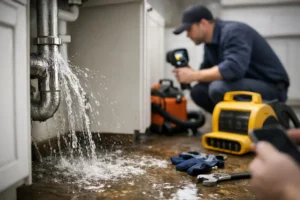
Firefighting water needs the same urgency as a flood. Water can travel below flooring, behind baseboards, into wall cavities, and through ceilings to lower levels. Without professional extraction and drying, moisture can weaken materials, damage finishes, and contribute to mould growth.
A qualified restoration team will assess moisture levels, remove unsalvageable wet materials when necessary, set up drying equipment, and monitor the property until affected areas meet appropriate drying targets. In some cases, this work needs to happen before soot cleaning or reconstruction can begin. In others, both processes must be carefully coordinated to avoid spreading contamination.
If your fire was limited to one room, do not assume the rest of the property is unaffected. HVAC systems and air movement can carry smoke particles well beyond the source area, while water can migrate in the opposite direction through floors and ceilings.
8. Plan Repairs Only After Proper Mitigation
Emergency cleanup is the first phase, not the finish line. Once the property is clean, dry, and safe, repairs may include replacing insulation and drywall, rebuilding cabinets, refinishing floors, repairing electrical systems, repainting, restoring trim, and addressing damaged roofing or exterior openings.
Ask for clear updates on what has been found, what work is underway, and what comes next. For landlords and property managers, that communication is particularly valuable when coordinating insurers, tenants, boards, contractors, and reopening timelines. A single accountable restoration team can keep mitigation and reconstruction aligned, rather than leaving you to manage several disconnected trades.
When to Call for Professional Fire Cleanup
Call for emergency help immediately if there is visible soot, lingering smoke odour, water from firefighting efforts, damaged electrical systems, broken windows or doors, wet building materials, or any uncertainty about structural safety. Even minor fires deserve a careful assessment because smoke and moisture often extend beyond the obvious burn area.
The most helpful thing you can do after a fire is resist the urge to solve everything at once. Secure the property, document what happened, involve your insurer, and let trained professionals manage the contamination, drying, and repairs. With the right response, a damaged space can move from chaos to a safe, finished place to live or work again.