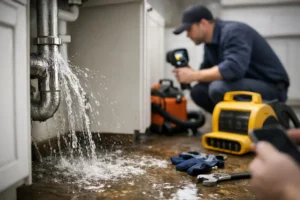

How to Repair Pipe Leaks Before Damage Spreads
A pipe leak can begin with a small damp spot beneath a sink and become a soaked cabinet, damaged flooring, and hidden mould problem far sooner than most property owners expect. To repair pipe leaks properly, you need to stop the water first, understand what failed, and make sure moisture has not travelled behind walls, under flooring, or into the ceiling below.
For homeowners, condo residents, landlords, and commercial property managers, the priority is not simply getting water to stop dripping. It is protecting the building, its occupants, and the parts of the loss that may not be visible yet.
Start by Stopping the Water
If water is actively escaping from a pipe, fixture, valve, or appliance connection, shut off the nearest local supply valve if it is accessible and working. Under-sink shutoff valves, toilet supply valves, and appliance valves can often isolate a small leak without interrupting water to the rest of the property.
If you cannot stop the flow locally, turn off the main water supply. In a house, this is commonly near the water meter or where the main line enters the building. Condo residents should contact building management right away, particularly if the leak may affect another unit. In a commercial building, notify the person responsible for building systems and follow the site’s emergency procedures.
Then move items away from the affected area, place containers under a controlled drip, and use towels to absorb surface water. Avoid using electrical equipment near standing water. If water has reached outlets, light fixtures, electrical panels, or appliances, keep clear of the area and arrange professional help immediately.
A temporary measure, such as a pipe repair clamp or epoxy putty, may reduce a small pinhole leak long enough to prevent further water loss. It is not always a permanent repair. Corroded pipe, failed joints, frozen lines, and split supply hoses can signal a broader problem that needs proper plumbing repair and moisture assessment.
Identify What Kind of Leak You Have
The location and behaviour of the leak help determine how urgent the situation is. A slow leak under a bathroom vanity is different from a burst pipe inside a finished wall, but both can cause serious damage if left unresolved.
Leaks at Exposed Connections
Leaks around P-traps, shutoff valves, supply lines, dishwasher hoses, washing machine connections, or pipe joints are often visible. A loose fitting or worn washer may be the cause. Dry the area completely, then watch for fresh moisture while the fixture is used. This helps confirm whether water is coming from the connection itself or from somewhere higher up.
Do not overtighten old fittings. A cracked plastic nut, brittle valve, or corroded metal connection can fail completely when forced. If the pipework is aged or the fitting continues to seep after a careful adjustment, a licensed plumber should replace the affected component.
Leaks Behind Walls, Ceilings, or Floors
Staining, bubbling paint, warped baseboards, a musty smell, or a ceiling that feels soft can point to a concealed leak. Water may travel along framing, wiring paths, or the underside of flooring before appearing somewhere else. The visible stain is not necessarily the source.
A bulging ceiling requires immediate attention. Keep people away from the area, turn off water if a plumbing leak is suspected, and do not puncture the ceiling unless a qualified professional has instructed you to do so. The ceiling may be holding a significant amount of water, and collapse is possible.
Frozen or Burst Pipes
Ontario winter temperatures can turn an unprotected pipe into an emergency quickly. Frost on a pipe, reduced water flow, or no flow at all may indicate freezing. Shut off the water supply if a pipe has burst or is visibly split. Never use an open flame to thaw plumbing. Safe thawing methods depend on the pipe location, material, and condition, and a pipe that has frozen once may already be damaged.
Why a Simple Pipe Repair May Not Be Enough
Stopping the leak addresses the source, but it does not automatically resolve the water damage. Drywall, insulation, engineered flooring, cabinetry, and subflooring can absorb moisture. Water trapped inside a wall cavity may remain there even when every visible surface feels dry.
This is where timing matters. Materials can begin supporting mould growth within 24 to 48 hours when moisture is not properly removed. Odours, staining, and structural deterioration may follow, while contaminated materials can create a more complicated and expensive restoration project.
Professional drying is particularly important when water has affected finished spaces, insulation, hardwood or laminate flooring, ceilings, commercial inventory, or multiple units. A restoration team uses moisture detection equipment to identify where water travelled, removes standing water, sets controlled drying equipment, and monitors progress until affected materials meet appropriate drying targets.
For a clean-water leak caught early, limited drying and a plumbing repair may be enough. For a long-term hidden leak, a burst pipe, or water that has passed through building materials, selective removal of damaged drywall, insulation, flooring, or cabinetry may be necessary. The right scope depends on what is wet, how long it has been wet, and whether the water source was clean, grey, or contaminated.
A Practical Process to Repair Pipe Leaks and Restore the Area
A reliable response follows a clear order. Skipping steps can leave moisture behind and create problems after the visible repair is complete.
1. Control the source
Shut off the water, isolate the affected plumbing line where possible, and arrange a qualified plumbing repair. Take photos before moving damaged contents if it is safe to do so. This documentation can help with an insurance claim.
2. Assess the full extent of water damage
Check adjoining rooms, the level below, nearby closets, and areas around baseboards. In condos and multi-unit properties, water can move into common areas or neighbouring suites. A professional assessment can identify concealed moisture without unnecessary demolition.
3. Extract water and dry affected materials
Surface mopping is useful, but it is not a substitute for extraction and structural drying when water has soaked into materials. Rapid extraction, air movement, dehumidification, and moisture monitoring reduce the risk of secondary damage.
4. Repair and restore finishes
Once the area is dry and the plumbing issue is resolved, damaged materials can be repaired or replaced. This may include drywall, insulation, trim, flooring, cabinets, paint, or ceiling finishes. Completing repairs before verifying dryness can trap moisture inside the assembly.
When to Call for Emergency Water Damage Help
Call for immediate professional support when a pipe has burst, water is running into a wall or ceiling, a ceiling is sagging, several rooms are affected, or water has reached electrical components. The same applies when the leak occurred while the property was vacant, when you cannot determine how long it has been leaking, or when a condo neighbour or commercial tenant may be affected.
You should also seek help if there is a musty odour, visible mould, wet insulation, warped flooring, or repeated leaks in the same area. These signs often mean the issue goes beyond a simple fitting replacement.
Restoration Canada provides 24/7 emergency response across the Greater Toronto Area, with a process designed to take control of both the immediate water issue and the work required to restore the property. That includes damage assessment, water extraction, drying, cleaning, repairs, and direct insurance billing where applicable.
Preventing the Next Pipe Leak
Prevention is not about eliminating every plumbing risk. It is about catching predictable failures before they become an emergency. Inspect exposed supply lines and shutoff valves periodically, especially beneath sinks, behind toilets, and around washing machines. Replace deteriorated hoses rather than waiting for them to fail, and make sure household members or staff know where the main water shutoff is located.
During cold weather, keep vulnerable areas heated, seal obvious drafts near plumbing, and take extra care with pipes in exterior walls, garages, crawl spaces, or vacant properties. If you are leaving a property empty for an extended period, consider shutting off the water or arranging regular checks based on the building’s needs.
A repaired pipe should bring peace of mind, not uncertainty. If water has entered building materials or you are unsure whether the area is truly dry, act early. Prompt, thorough attention can be the difference between a contained plumbing repair and a larger restoration project.