

Commercial Flood Damage
Toronto: Landlord & Tenant
Responsibilities
A flooded commercial property triggers one immediate question — who is responsible? For Toronto landlords and tenants, the answer is rarely automatic. It lives inside the lease agreement. Here is what every party needs to know.
- Commercial Responsibility in Ontario
- Why the Lease Matters
- Common Scenarios & Who Pays
- Property Categories Explained
- Key Lease Clauses
- Immediate Steps After a Flood
- Insurance Considerations
- Reducing Future Disputes
- FAQs
Commercial flooding can stop business operations in hours and create financial consequences that last for months. One flooded retail store, office, warehouse, or commercial unit can trigger property damage, business interruption, insurance disputes, and restoration costs — along with one difficult question that landlords and tenants consistently disagree on: who is actually responsible?
For businesses across Toronto, responsibility after a flood is rarely automatic. Landlords often assume tenants will cover damages inside the unit. Tenants often expect landlords to handle everything related to the building. In reality, the answer almost always sits inside one document: the commercial lease agreement.
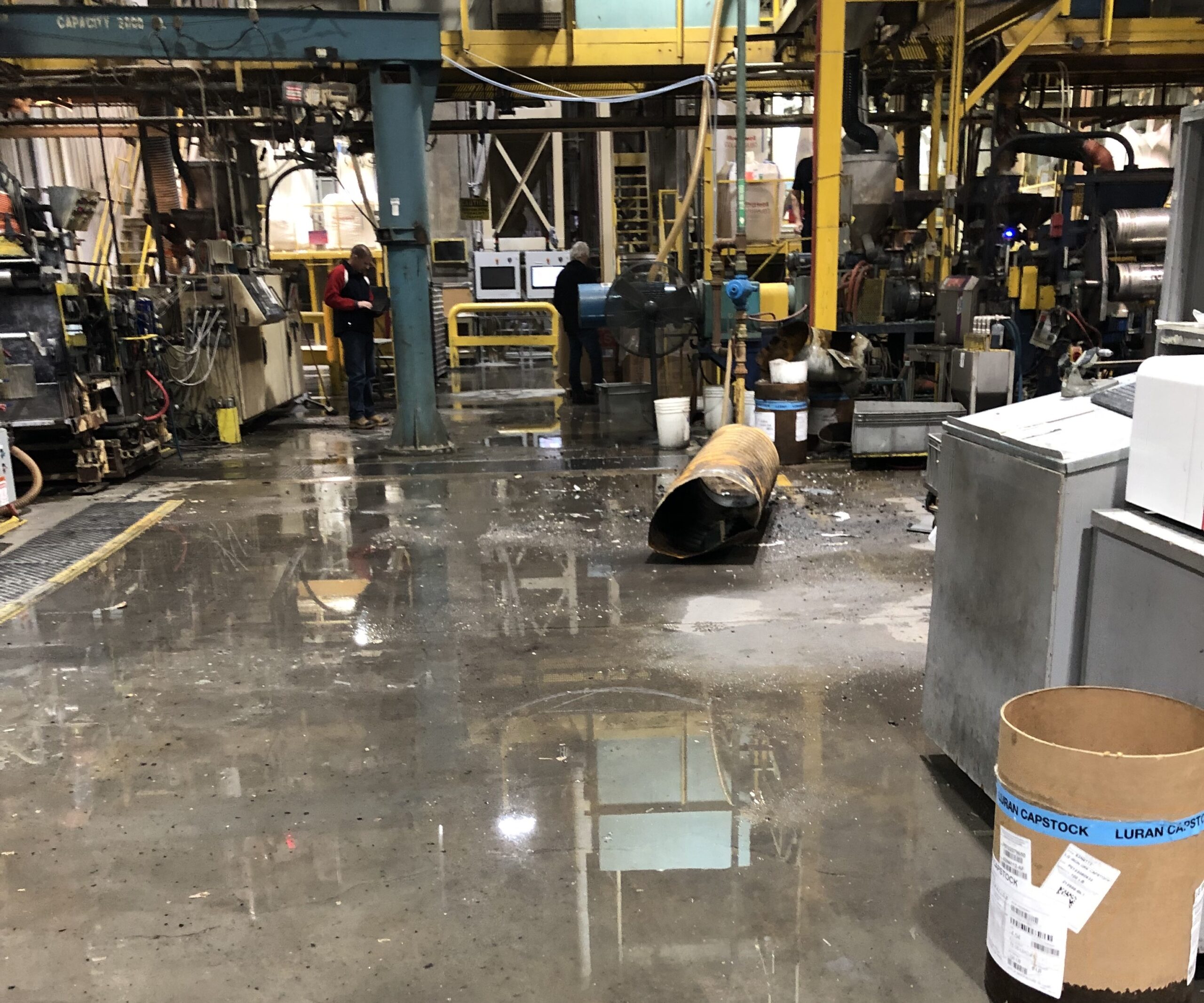
Understanding Commercial Flood Responsibility in Ontario
Commercial flood events work differently from residential situations. Ontario commercial leasing is governed through the Commercial Tenancies Act, but the lease agreement itself typically determines repair obligations, insurance requirements, restoration duties, and liability allocation. That means the first step after a flood is not assigning blame — it is understanding contractual obligations.
Typical factors that influence commercial water damage responsibility Ontario include:
- → Source and origin of the water damage
- → Specific repair and maintenance clauses in the lease
- → Insurance obligations and endorsements held by each party
- → Whether negligence or preventable actions contributed to the flood
- → Type of commercial lease structure (gross, net, or triple-net)
Why the Lease Agreement Matters More Than Most People Expect
Many business owners assume the building owner automatically pays for all structural flood damage. Commercial leases frequently work differently. Ontario commercial agreements assign responsibilities based on lease structure — gross leases usually leave more building obligations with landlords, while net and triple-net (NNN) leases may transfer substantial maintenance and operational responsibility to tenants.
Key Lease Clauses to Review Immediately After Flooding
- Repair and Maintenance Clauses Define who is responsible for restoring walls, flooring, mechanical systems, and the leased area itself. These sections determine the primary recovery obligation.
- Insurance Requirements Commercial leases commonly specify landlord property insurance, tenant contents insurance, commercial liability coverage, and business interruption requirements for each party.
- Casualty and Damage Clauses Explain whether rent continues during repairs, establish restoration timelines, define termination rights, and set temporary occupancy rules. One overlooked paragraph can affect thousands in costs.
Common Commercial Flood Scenarios and Who Usually Pays
Responsibility for commercial flood damage Toronto landlord tenant situations often depends primarily on where the water came from. The table below summarizes typical responsibility allocation — though actual outcomes always depend on specific lease language and insurance policies.
| Flood Scenario | Typical Landlord Responsibility | Typical Tenant Responsibility |
|---|---|---|
| Burst building pipe | Building restoration | Contents and operations |
| Roof leak | Structural repairs | Inventory losses |
| Sewer backup | Depends on coverage | Tenant property losses |
| Tenant-caused overflow | Limited | Potential full liability |
| Storm water infiltration | Depends on lease | Business interruption losses |
If a building plumbing system fails and floods commercial units, landlords commonly handle restoration of structural components under their property insurance. However, tenants typically remain responsible for their own inventory, equipment, furniture, and revenue losses — even when the flooding originated from building infrastructure the tenant had no control over.
If flood damage results from tenant negligence — such as improperly maintained equipment, leaving water systems running unattended, or failing to report a known leak — the tenant may face direct liability depending on lease terms. Documentation of the event timeline and cause becomes critical in these situations, as disputes about negligence are common and expensive to resolve.
Commercial Property Flooded?
Fast professional response limits damage, reduces restoration costs, and generates the documentation both parties need for insurance claims.
Commercial Water Damage Responsibility — Property Categories
When discussing commercial water damage responsibility Ontario businesses face, it helps to separate property into three clear categories. Each category typically falls under different responsibility — and different insurance coverage.
- Structural walls & foundations
- Roof systems
- Shared plumbing lines
- Electrical infrastructure
- Common area systems
- Custom flooring
- Interior partitions
- Specialty plumbing
- Fixtures & millwork
- Branding installations
- Computers & equipment
- Inventory & stock
- Business documents
- Furniture & fixtures
- Revenue interruptions
Business Flooding Lease Toronto: Critical Clauses That Affect Recovery
Flood disputes rarely happen because nobody cared. They happen because nobody reviewed the lease before an emergency. If you operate under a business flooding lease Toronto arrangement, these sections require immediate attention after any water event.
Insurance and Subrogation Clauses
These determine whether insurers pursue the other party after paying a claim — a process called subrogation. If a landlord's insurer pays for building restoration and determines tenant negligence caused the flood, the insurer may pursue the tenant directly. Understanding subrogation waivers in the lease can prevent unexpected legal exposure.
Rent Abatement Clauses
Commercial tenants cannot automatically stop paying rent because repairs are underway. Unless the lease language specifically includes rent abatement provisions triggered by flooding or uninhabitable conditions, rent obligations generally continue regardless of restoration status. Many tenants discover this only after stopping payments and receiving a default notice.
Restoration Timelines and Contractor Approvals
Leases often define notice periods before restoration can begin, contractor approval requirements, maximum restoration timelines before termination rights activate, and rules around temporary occupancy during repairs. Failing to follow these procedures — even when acting in good faith — can create lease violations that complicate recovery further.
Immediate Steps After Commercial Flood Damage
Flood response speed matters enormously in commercial settings. Waiting increases moisture damage, mould growth, business interruption duration, and insurance complications simultaneously. The sequence below applies to both landlords and tenants.
Ensure the property is safe before anyone enters flooded areas. Shut down utilities if conditions require it. Electrical hazards in commercial spaces can be significant depending on the type of business and equipment present.
Capture photos and video of all affected areas, damaged inventory and equipment, the apparent origin of the water, and a timeline of when the event was discovered. This documentation supports both insurance claims and any lease-related disputes.
Contact the landlord, property manager, insurance carrier, and restoration company as soon as possible. Ontario guidance consistently emphasizes written communication from the first hour — verbal notifications are difficult to verify and often become disputed later.
Commercial flood losses grow quickly. Every hour without active extraction and drying increases reconstruction scope, extends closure duration, and raises total restoration costs. Fast professional response is the single most effective way to limit financial impact for both parties.
Insurance Considerations After Commercial Flooding
Insurance creates another layer of responsibility that often operates independently from lease obligations. Both landlords and tenants may hold policies that apply — and understanding what each covers prevents costly surprises during the claims process.
Commercial property policies may include water damage coverage, sewer backup protection, property restoration expenses, equipment replacement, and business interruption. Coverage limits and exclusions vary significantly between policies and providers. Questions every party should ask their insurer immediately after a commercial flood include:
- ? Does the policy cover flood specifically, or only certain named water events?
- ? Is business interruption coverage included and what triggers it?
- ? Are restoration expenses capped at amounts that may fall short of actual costs?
- ? Is mould remediation covered if moisture is not addressed immediately?
How Landlords and Tenants Can Reduce Future Flood Disputes
The strongest flood strategy starts before water appears. The businesses and property owners who navigate flood events most successfully are those who prepared — contractually and operationally — long before an emergency occurred.
- Inspect plumbing and drainage systems annually
- Maintain roofs, eavestroughs, and exterior sealing
- Clarify repair obligations explicitly in lease language
- Require tenants to provide insurance certificates
- Respond to tenant-reported leaks immediately in writing
- Protect inventory from floor-level flood exposure
- Review lease language annually — not just at signing
- Carry comprehensive business interruption insurance
- Report any leaks or moisture concerns immediately
- Understand subrogation clauses before signing renewals
Conclusion
Understanding commercial flood damage Toronto landlord tenant responsibility starts with one principle: commercial leases drive most decisions. Landlords are not automatically responsible for every loss. Tenants are not automatically liable for every repair. Building systems, lease obligations, insurance policies, and the source of flooding all influence who pays — and in what proportion.
The fastest recoveries happen when documentation starts immediately, professional restoration begins early, and every party understands their role before the next storm arrives. Flood events test more than buildings — they test preparation, communication, and the clarity of agreements made long before water ever appeared.
Commercial Flood Damage Doesn't Wait
If your business property has experienced water intrusion or operational disruption, immediate restoration reduces long-term costs and supports insurance documentation for both landlords and tenants.
(416) 639-172224/7 emergency response · Commercial properties across the GTA
Frequently Asked Questions
Not automatically. Responsibility depends on the commercial lease terms, the source of the water damage, and the insurance policies held by each party. Building infrastructure failures typically involve landlord coverage for structural components — but tenant contents, inventory, and revenue losses remain the tenant's responsibility regardless of flood origin.
Coverage depends entirely on policy wording and endorsements. Standard commercial property policies may not automatically include flood, sewer backup, or overland water — these typically require separate additions. Both landlords and tenants should review their policies specifically for water-related exclusions before assuming coverage exists.
Only if the commercial lease includes specific rent abatement provisions triggered by flood damage or uninhabitable conditions. Without explicit lease language permitting it, rent obligations generally continue during repairs. Stopping payments unilaterally can result in a lease default — which creates additional legal exposure during an already difficult situation.
Tenant contents insurance commonly covers inventory losses. The landlord's building insurance policy typically does not extend to tenant property, equipment, or stock — regardless of whether the flooding originated from building infrastructure. Tenants without adequate contents insurance face the full cost of inventory losses personally.
Document all damage immediately with photos and video, notify the landlord, insurer, and property manager in writing as quickly as possible, and begin professional extraction and drying without delay. Commercial flood losses grow significantly with every hour of delay — both in physical damage scope and in business interruption duration.