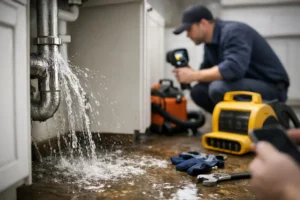

Why Basement Leak Toronto Homes Are Vulnerable in Winter
Basement leaks in Toronto are rarely random. They are the result of predictable environmental and structural factors that intensify during winter.
- Frozen Ground and Poor Drainage
Frozen soil prevents proper absorption of melting snow. Water accumulates near the foundation, increasing pressure and forcing moisture into the basement. - Snow Accumulation Near the Foundation
Snow piled along exterior walls slowly melts during mild spells. This meltwater flows downward and saturates soil directly beside the foundation. - Ice-Blocked Downspouts and Window Wells
Ice buildup in downspouts and window wells prevents proper drainage, redirecting water toward basement walls. - Foundation Aging and Thermal Stress
Many Toronto homes were built decades ago. Over time, foundations develop microcracks that expand during repeated freeze–thaw cycles, leading to persistent leaks.
Early Warning Signs of a Basement Leak in Winter
Winter leaks often go unnoticed because water movement is slower and hidden behind walls or under flooring. We recommend watching for these critical warning signs:
- Persistent Damp or Musty Odors
A strong earthy smell indicates moisture trapped in walls or insulation—often the first sign of a hidden leak. - Efflorescence on Basement Walls
White, chalky residue on concrete surfaces confirms active moisture migration through foundation materials. - Cold, Damp Walls or Floors
Basement walls that feel unusually cold and damp during winter often indicate water intrusion behind the surface. - Peeling Paint or Bubbling Drywall
Moisture pressure behind finished walls causes paint to blister and drywall to deteriorate. - Visible Mold Growth
Mold appearing in corners, behind furniture, or near baseboards signals ongoing basement water damage that requires immediate attention.
Basement Water Damage: Why Winter Makes It Worse
Winter moisture problems are especially destructive because water remains trapped longer. Unlike summer rain, snowmelt seeps slowly and continuously.
- Prolonged Moisture Exposure: Frozen soil prevents proper drainage, keeping water against foundation walls for weeks.
- Expansion Damage: Water expands when frozen, widening cracks and weakening concrete over time.
- Hidden Structural Deterioration: Damage often occurs behind walls or beneath floors before visible flooding appears.
Unchecked basement water damage compromises structural integrity, degrades insulation, and creates conditions for mold growth that impact indoor air quality.
Leaky Basement Repair Cost in Toronto: Winter 2026 Overview
Understanding leaky basement repair cost helps homeowners plan strategically instead of reacting to emergencies.
- Minor Crack Repairs
Hairline or localized cracks can often be sealed using professional injection methods. These repairs are effective when addressed early and prevent further water infiltration. - Interior Drainage and Sump Pump Systems
Interior waterproofing systems collect water entering the basement and redirect it safely to a sump pump. These systems are commonly installed during winter when exterior excavation is impractical. - Exterior Waterproofing Solutions
Exterior waterproofing involves excavating around the foundation to install membranes and drainage systems. While more expensive, this approach addresses the root cause by stopping water before it enters the structure. - Window Well and Drainage Corrections
Replacing damaged window wells, clearing snow buildup, and improving drainage around basement openings can significantly reduce winter leaks. - Water Remediation Services
Severe cases involving soaked materials, mold, or standing water require professional water remediation, including drying, sanitizing, and restoring damaged areas.
Cost to Fix Leaking Basement: Key Factors That Influence Price
The cost to fix leaking basement issues varies widely based on several critical factors:
- Severity of the Leak: Active water flow costs more than slow seepage.
- Size of the Basement: Larger foundations require more materials and labor.
- Foundation Type: Poured concrete, block, or stone foundations each require different repair approaches.
- Accessibility: Snow, ice, and landscaping affect repair complexity.
- Preventive Upgrades: Adding sump pumps or drainage improvements increases upfront costs but reduces future risk.
Addressing issues early in winter typically costs less than waiting until spring flooding exposes deeper damage.
Best Winter Waterproofing Strategies for Toronto Homes
Proactive measures are the most effective defense against winter basement leaks.
- Maintain Downspouts and Eavestroughs
Ensure downspouts remain clear of ice and extend well away from the foundation to prevent snowmelt pooling. - Control Snow Placement
Avoid piling snow directly against the house. Redirect snow away from foundation walls and window wells. - Monitor Foundation Walls
Inspect basement walls regularly during winter for new cracks, dampness, or efflorescence. - Install Reliable Sump Pump Systems
A properly sized sump pump with a battery backup is essential during winter thaws and power outages. - Schedule Professional Inspections
Winter-specific assessments identify vulnerabilities that are not visible during dry seasons.
Why Professional Repair Is Essential in Winter
Winter repairs require specialized knowledge of cold-weather materials, curing times, and moisture behavior. Temporary fixes often fail under freeze–thaw stress, leading to recurring leaks and higher long-term costs.
Professional waterproofing solutions are designed to perform in Toronto’s winter conditions, providing durable protection and documented warranties that safeguard property value.
Protecting Long-Term Property Value
A dry basement enhances usable living space and strengthens resale appeal. Buyers are increasingly aware of moisture risks, and documented waterproofing solutions provide reassurance and reduce negotiation challenges.
Preventing basement leaks during winter protects structural integrity and avoids costly repairs when spring melt arrives.
Final Thoughts on Basement Leak Toronto in Winter 2026
With January 2026 bringing sustained cold, snowfall, and freeze–thaw cycles, Toronto homeowners face elevated basement leak risks. Understanding winter-specific causes, recognizing early warning signs, and investing in effective waterproofing solutions are essential to preventing long-term damage.
Taking action now reduces basement water damage, controls leaky basement repair cost, and ensures your home remains safe, dry, and structurally sound throughout the harsh winter season.
 Call Us 24/7 at 416-639-1722 for immediate water damage help
  Visit Restoration Canada to learn more
  Proudly serving Toronto and GTA area